Years ago, I found myself aboard a Protector Hauraki 40 with 550 hp and an owner who loved opening the throttles. This made for memorable driving shifts, but it also added gravity to our situation: The Johnstone Strait, which separates Vancouver Island from mainland British Columbia, is notoriously punctuated with logs . Our crew was experienced, but we were relying solely on sharp eyes to avoid calamity.
This worked until we hit a log at full speed. Fortunately, crew and vessel were fine, but the collision left me thinking that there had to be a better way of plying log- or traffic-strewn waters, beyond common-sense throttle moderation.
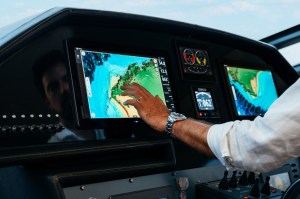
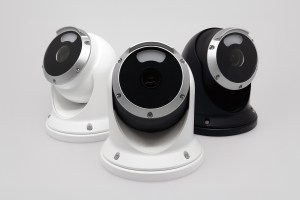
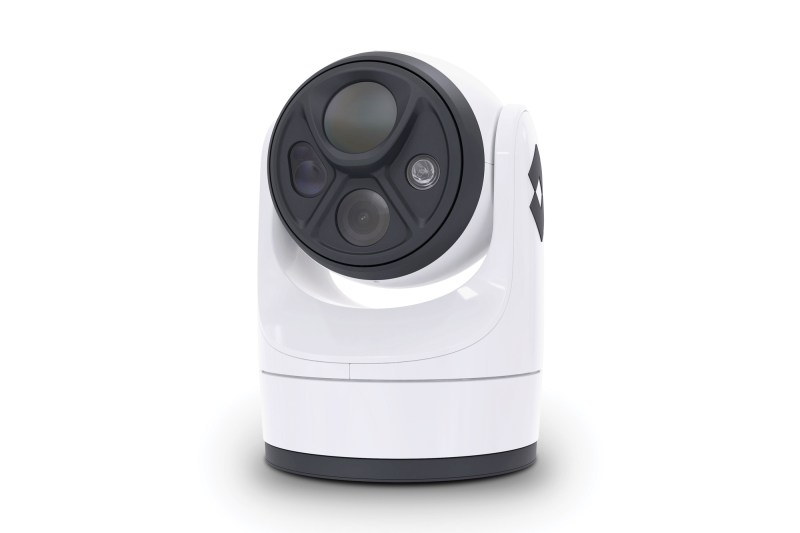
FLIR is offering a solution. The company has built high-end thermal-imaging cameras for years, and its two newest fixed-mount models—the M460 and M560—carry substantially better sensor payloads than their predecessors. The M460 and M560 can automatically identify and classify targets captured in their video feeds, which are shown on a networked multifunction display.
These cameras are radome-enclosed and precision-aligned instruments that have high-resolution, thermal-imaging sensors, 4K low-light daylight cameras with 25x optical zooms (and 12x digital zooms), and laser spotlights. Each camera weighs about 70 pounds and can be spec’d with optional laser rangefinders.
Additionally, these cameras have multispectral capabilities that combine imagery from the thermal and optical cameras to paint infrared imagery with context-adding color, such as adding color to a thermally captured buoy. There’s also AI-enabled target tracking, leveraging a FLIR convolutional neural network that lets the cameras automatically identify and classify targets.
And, the cameras mechanically stabilize their imagery across three axes. This is a big upgrade over FLIR’s previous-generation cameras, which compensated for pitch and heave, but not roll.
What separates the two models is that the M460 (from $120,000) uses an uncooled long-wave infrared sensor with a 5.86- to 30.68-degree field of view, a 5.4x thermal optical zoom and a 4x digital zoom. The M560 (from $235,000) uses a cooled midwave infrared thermal sensor that yields a 1.9- to 2.8-degree FOV, a 14.9x thermal optical zoom and an 8x digital zoom.
“The cooled core gives us more range, more sensitivity,” says Jim McGowan, Raymarine’s Americas marketing manager.
The M560 has a closed-loop system that’s charged with helium, and a compressor that turns this gas into liquid helium that’s minus 508 degrees. This matters, McGowan says, because all objects emit electromagnetic radiation, including the camera’s thermal core and sensor window.
“It significantly increases the sensitivity of the device and what it can see,” McGowan says. “So now we’re only seeing infrared from essentially outside of the camera enclosure, and we’re not getting any noise or junk from inside.”
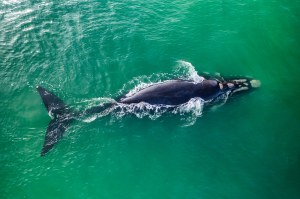
The precision-aligned laser rangefinder is about a $30,000 option. It measures the range, bearing and position of targets out to 6.5 nautical miles. McGowan says these targets can be anything from buoys and vessels to whales, but to keep the cameras clear of international arms regulations, there’s a built-in one-second delay, and users cannot continuously ping targets.
With or without a rangefinder, these cameras have high-end thermal-imaging with AI tracking capabilities and onboard CNNs, which automatically identify and classify targets (say, aids to navigation or vessels) in real-time video streams. All system intelligence and processing are done inside the cameras’ radomes and don’t require connectivity.
“We basically trained an AI engine using hundreds of thousands of photos and thousands of hours of video,” McGowan says. “And over time, it has built up knowledge of common objects that are in the marine environment.”
The result, he says, is that the M460 and M560 know what detected objects are, rather than merely being able to discern that there’s an object floating on the water. These cameras can simultaneously put brackets (large targets) or pins (small targets) on up to 24 targets in their video feed, and users can select any target to engage the cameras’ AI tracking feature.
“When it goes into video-tracking mode, it’s actually driving the camera’s pan and tilt to follow it,” McGowan says. “The AI knows what [a particular] boat looks like. And it knows what it’s going to look like when it changes aspect. …So even if another boat passes through the scene, it knows [which] boat it’s looking for, and it’ll pick it up on the other side.”
While the cameras’ AI target-tracking feature engages one target at a time, users can change targets by selecting different brackets or pins. Or, if applicable, a new target.
Additionally, these cameras have FLIR’s slew-to-cue feature, which uses radar or Automatic Identification System data to track targets. “The multifunction display actually sends a command to the camera to turn to such a bearing, such a range, and adjusts the tilt to this angle,” McGowan says.
Once a target is being tracked, users can illuminate it with the cameras’ laser spotlights, which have 2.2-degree beam width and deliver 1,000 lumens of light at ranges up to 0.54 nautical miles. “It’s a nice way to be able to let people know that they’re being watched,” McGowan says, adding that the spotlights are so bright, FLIR is required to put laser- radiation hazard stickers on the cameras.
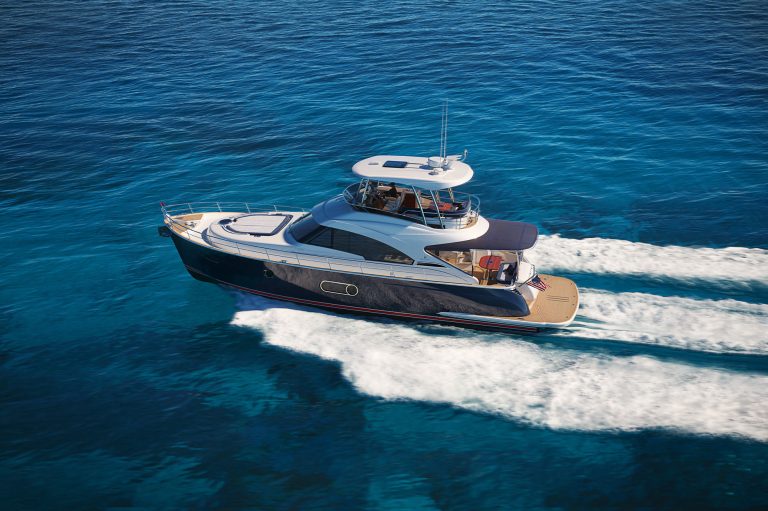
All systems have their pluses and minuses, of course, and FLIR’s M460 and M560 are no exception. On the pro side, these cameras deliver significant situational awareness, impressive tracking and greater onboard security than their forebears. However, the cameras have a significant cost, and their weight, which is carried aloft, requires yachts with substantial waterline, beam and displacement measurements. (FLIR designed these cameras for military vessels, ships, superyachts and unmanned surface vessels.)
While I’m not sure how well that Protector Hauraki 40 would have handled the weight of either camera atop its coachroof, I know our crew would have appreciated greater target awareness than what our bare eyeballs afforded.
Periodic Maintenance
The M560 has better optical-zoom capabilities with its thermal-imaging camera, but the compressors that keep the ultra-cold liquid helium flowing over the infrared sensors need to be rebuilt biennially. This necessitates some downtime, but Raymarine says it represents a 40 percent improvement over FLIR’s previous cooled cameras.