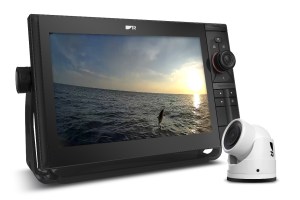
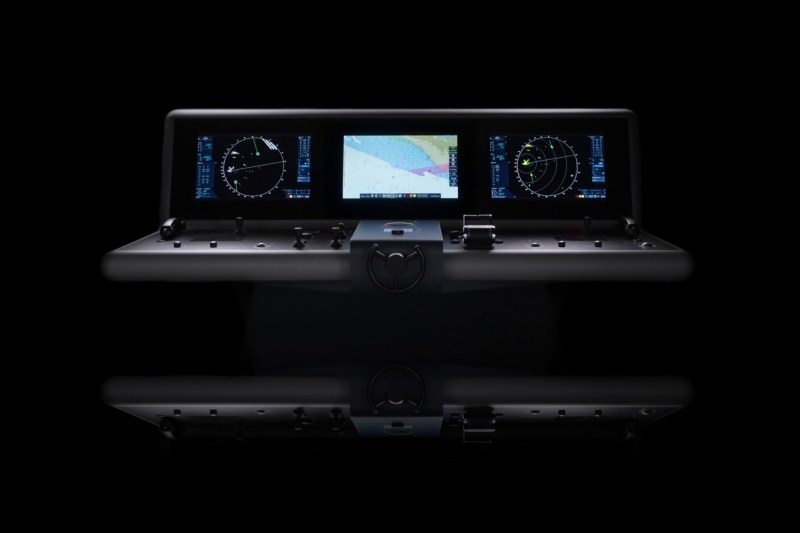
The old saw holds that there are two kinds of mariners: those who have run aground, and those who will run aground. Ensuring one’s place in the latter camp requires careful navigation, a rock-solid nav system and accurate cartography. But what happens if buoy positions or the seafloor change faster than the charts?
While some superyachts are required to carry navigation systems and electronic navigation charts that are certified by the International Maritime Organization, many yachts—both mighty and modest—run multifunction displays and recreational-level cartography. The latter is updated anywhere from daily to annually.
If recreational-level offerings aren’t stable, secure or updated frequently enough for a given cruising itinerary, there’s nothing stopping recreational mariners from spec’ing commercial-level equipment.
The IMO first adopted standards for electronic navigation charts in the 1990s. In 2000, the IMO revised carriage requirements to allow commercial vessels to sail with electronic chart display and information systems, known as ECDIS, instead of printed charts. As of 2011, the IMO made ECDIS mandatory equipment aboard new ships.
While Raymarine’s Pathfinder ECDIS 24 was primarily designed for the commercial-marine market, the system can benefit superyacht owners who are seeking professional-level navigation equipment and always-fresh cartography, as well as owners who charter certain plus-sized superyachts that may be required to carry a certified electronic chart display system. The Pathfinder ECDIS 24 fits both bills, while providing users with a secure and future-proofed navigation platform.
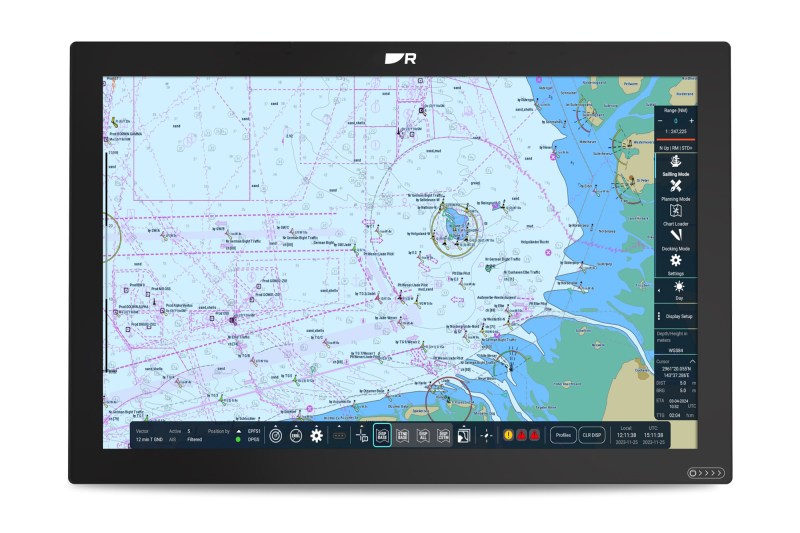
Hardware-wise, Raymarine’s touchscreen-enabled Pathfinder ECDIS 24 consists of a certified 24-inch display with a built-in processor. Pathfinder ECDIS 24s also comes with data collection units and ChartWorld eSync gateways. Marine-grade, certified trackball controllers are included, and customers can upgrade to the Pathfinder Keyboard ($2,145), which is a combined keyboard/trackball.
Pathfinder ECDIS 24s are sold with single ($10,000) or dual ($19,000) screens. “In many jurisdictions now, you’re required not only to have a primary ECDIS, you’re also required to have a backup ECDIS,” says Jim McGowan, Raymarine’s Americas marketing manager. “So, we sell it in both configurations.”
McGowan says a Pathfinder ECDIS 24 is based on a premium-level Raymarine multifunction display that’s running Raymarine’s Pathfinder ECDIS software and that’s controlled via a trackball controller or Pathfinder Keyboard. “Those devices are certified together,” McGowan says, noting that the IMO maintains strict ECDIS certification standards. “If you make any variations beyond what is on the certificate, it’s now invalid.”
Critically, Pathfinder ECDIS 24 gives mariners a locked-down, cyber-resilient appliance that’s not based on a general-purpose PC. Raymarine controls the full stack, from the hardware and operating-system environment to chart delivery. McGowan says this setup reduces opportunities for attack and obviates the need for antivirus software and frequent operating-system patches.
“It’s all designed to be secured, encrypted, locked down, then we could put a cybersecurity gateway in front of it that also protects the ship and all of its internal systems from the internet and everything on the outside that could be trying to get in,” McGowan says. “It’s just inherently a much more secure system because of that.”
It’s also designed to be universal.
“You want a product that a professional navigator is going to be able to walk up to, and, with a minimal amount of training, be able to operate very intuitively,” McGowan says. He notes that certain items can’t be buried deep down in menus; parts of the display can’t be obscured by sidebars or graphics; and screen resolution and color calibrations must be certified.
Then there’s networking. While recreational-level multifunction displays can present a menu of networked data and instrumentation, ECDIS is different.
“You may have radar overlay on your ECDIS. That’s allowed,” McGowan says. “But putting something else into one of those screens? Not happening.”
Instead, each Pathfinder ECDIS 24 comes with an Actisense-built data collection unit. “It’s a very advanced multichannel multiplexer,” McGowan says, explaining that the unit connects the screen to some NMEA 0183-compatible instruments including gyrocompasses, global navigation satellite system receivers, depth sounders and anemometers. “This device pulls all those signals together. It actually bridges [the data] into Ethernet, and that’s how we get it into the ECDIS.”
ECDIS systems also give mariners access to the latest cartography, McGowan says: “The charts that run on ECDIS systems are certified navigation charts. The charts they have would generally never be more than seven days old.”
Enter ChartWorld’s eSync. McGowan describes this external hardware, which is about the size of a coffee cup, as a certified marine cybersecurity gateway with a built-in 4G modem and router, plus dedicated cellular and Wi-Fi antennas. Additionally, it can leverage the vessel’s satellite communications and/or cellular modems.
“A couple of times a day, it connects back to a server at ChartWorld in Hamburg, Germany, and it looks for updates to your electronic navigation charts,” McGowan says. “It constantly pulls down the updates so that your [subscribed] chart library is always up to date.”
In addition to displaying the freshest cartographic data, McGowan says, Raymarine future-proofed Pathfinder ECDIS 24s by making them capable of running next-generation charts.
While commercial mariners have used the International Hydrographic Organization’s S-57 chart standard since 1992, the IHO is rolling out its S-100 standard over the next few years. “When it arrives, it is going to be mandatory,” McGowan says.
“ECDIS has lots of safety checks to try to make your voyage plan foolproof,” McGowan says. “S-100 adds additional levels of data and information on top of what is currently available, which will hopefully make [route planning] even better going forward.”
For example, McGowan points to S-100’s incorporated “Under Keel Clearance Management,” live weather forecasting and embedded current information.
So, if you’re interested in always cruising with the latest cartography, or if your vessel is required to carry a certified electronic navigation chart system, then Raymarine’s Pathfinder ECDIS 24 is worth consideration. As for avoiding the bricks, a Pathfinder ECDIS 24 networked to a GNSS receiver and displaying freshly downloaded charts with a radar overlay gives navigators professional-level situational awareness.
Little Brother Is Navigating
If you’re seeking a certified electronic chart display system but don’t want ECDIS-level equipment, then check out Raymarine’s Pathfinder ECS. These displays come in 16-, 19- and 22-inch sizes.