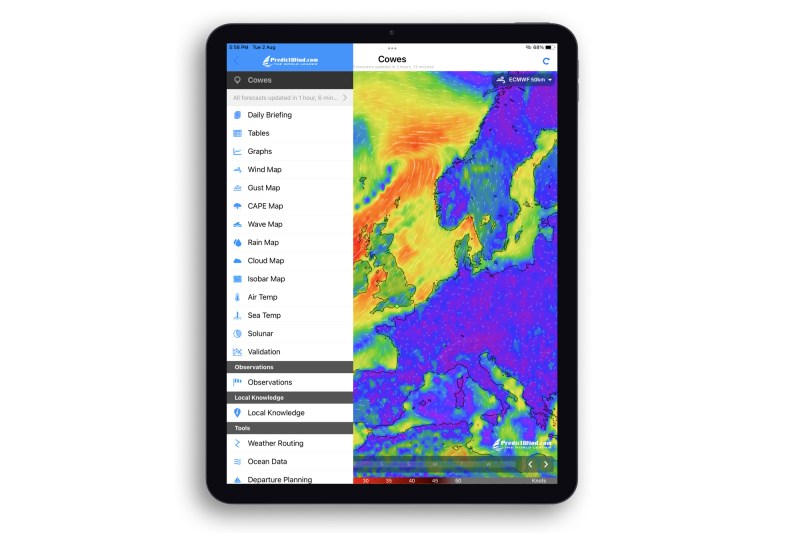
Predictwind meteorologist Arnaud Monges describes the past 50 years of weather forecasting the way Gen Z might describe a dusty calculus textbook from the 1980s. “You solve the equation, and you can predict the change of pressure that leads to change of wind and all those things,” Monges says. “That was weather forecasting.”
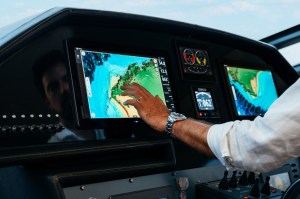
The old-school technique still works, of course, but PredictWind is now using artificial intelligence to build new forecasting methods. PredictWind G is based on the traditional American weather model, while PredictWind E is based on the European model. AI is then layered in.
“We trained the model by feeding it all the weather, all around the world, for all the parameters—wind, humidity, all those things,” he says. “We fed 50 years of historical data so the model can learn. It can compare what’s happening today and make the forecast.”
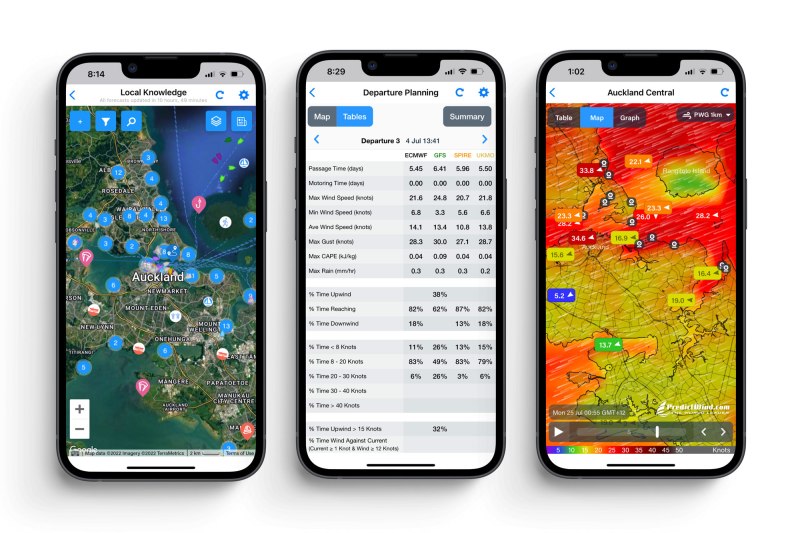
It’s working well, he says, albeit with a challenge that’s yet to be solved for super-specific locations. One example would be a boater on the coast who wants a wind forecast, but local topography, such as a hill, is a big influence. If there’s no historical data for that spot, the AI has limited data to analyze.
“We are not pulling away from the traditional model,” he says, “but we do see that the AI weather model is bringing new stuff. The AI model next year and this year are going to be very different. They’re going to improve and be better. We need to invest in the future, and we’re starting now in beta.”