On a blustery January day, I helped my friend deliver his sailboat from Anacortes, Washington, to Seattle. This is usually a routine trip, but this time, winter storms meant that massive trees, logs the size of telephone poles and branches peppered the Salish Sea. When we entered the Strait of Juan de Fuca’s open waters, wind-driven waves rode atop a good-size swell. I drove carefully, but I still dinged two relatively small branches that the waters concealed.
A week later, I was excited to see Sea.AI announce its integration with Barnacle Systems’ Brnkl Blue and Brnkl Black. Recording video imagery isn’t new, but this integration captures video imagery plus data from networked instrumentation, location information and systems data. It represents an important evolution, allowing owners, captains and insurers to review events with a data-rich awareness of exactly what unfurled.
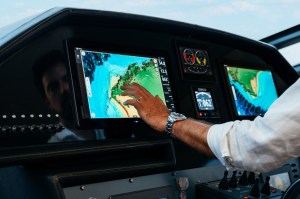
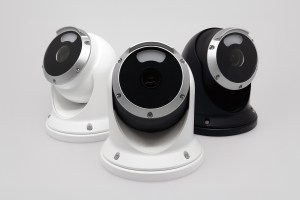
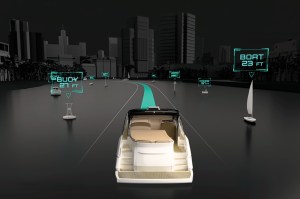
Sea.AI was founded in 2018 to help singlehanded sailors in the nonstop Vendee Globe Race avoid collisions. The system now supports power cruising by using one or more cameras to feed real-time video imagery to its embedded AI, which detects and classifies objects such as logs, whales and more. Sea.AI overlays color-coded, augmented-reality tags based on an object’s threat level onto the camera’s video stream, which is shown on a multifunction display.
Barnacle Systems was founded in 2017. Its first product, Brnkl, was a cellular-based security, monitoring and tracking (SMT) system that let owners remotely look after their yachts with real-time alerts. Sean Battistoni, Barnacle Systems’ chief growth officer, says the company used years of customer feedback to create its next-generation devices.
Brnkl Black is aimed at professional users, while Brnkl Blue ($4,300 to $5,400) is designed for recreational boaters. Each system includes embedded accelerometers, global navigation satellite system receivers (GPS/QZSS, Galileo, GLONASS, BeiDou constellations) and gyroscopes. Each system also has similar SMT capabilities as the original Brnkl (now called Brnkl 5G), but the new systems can also record, securely store and manage time- and location-stamped video imagery from one or more IP-enabled video cameras.
The data-loggers also have Ethernet and NMEA 2000 connectivity, plus the ability to play nicely with Starlink and other satellite-communications systems. Owners can have Wi-Fi and cellular connectivity by adding an onboard third-party marine router.
Philipp Stampfl, Sea.AI’s head of product, says customers have long requested the ability to record the system’s video stream and metadata. While they can use third-party networked video recorders, Barnacle Systems’ integration with Sea.AI’s Sentry and Watchkeeper systems takes this capability to the next level by also recording Sea.AI-generated metadata, plus data from third-party instruments and systems.
While Sea.AI uses artificial intelligence to detect, classify and identify objects in its video stream, Battistoni says, Brnkl Blue securely stores data. This distinction, Stampfl says, allows Sea.AI to focus on improving its detection and identification capabilities without having to create a recording solution. “If you combine two good products together, it’s even more powerful,” Stampfl says.
The combination matters for anyone who wants to document what happened on board. There are a few ways to do this. Battistoni says customers can set their Brnkl Blue to record Sea.AI-captured video imagery 24/7; they can use Sea.AI’s object detections to trigger Brnkl Blue to start alert-based recording, or they can do both by using Brnkl Blue’s time stamps to review captured events (think bookmarks).
Capacity-wise, Brnkl Blue customers can spec either 1 TB or 4 TB of storage.
While Brnkl Blue systems work with IP-enabled cameras from many manufacturers, Battistoni says that Barnacle Systems’ integration with Sea.AI allows the system to capture a Sea.AI video feed as it’s presented on a multifunction display. This allows Brnkl Blue to capture Sea.AI’s onscreen bounding boxes, augmented reality tags and metadata, including classification and identity information of detected objects.
Because Brnkl Blue can capture (based on each owner’s preferences) its own vessel’s speed, heading, engine RPM and germane NMEA 2000 data, owners or interested parties can use this information to dissect an event further.
“Sea.AI paints the picture, and Barnacle provides the evidence on what happens next, operationally,” Battistoni says. “Insurance companies love it because you get a 360-degree view of what happened visually, and what was going on in the boat’s critical systems.”
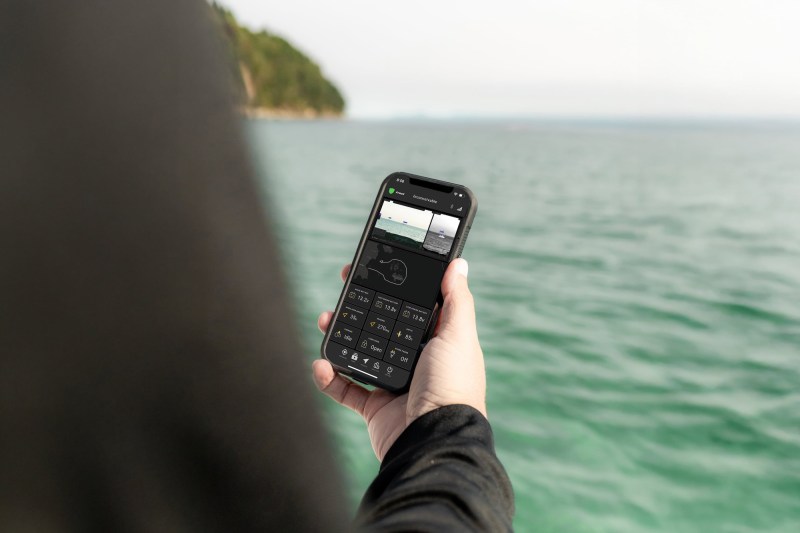
Captured data and video imagery is stored locally, and it can be downloaded to a USB drive or SD card, or shared with Barnacle Systems’ cloud. Customers also can use Barnacle’s app on their phone, tablet or computer to download and share it.
As mentioned, Brnkl Blue devices can simultaneously capture imagery from multiple IP-enabled cameras. “The most cameras I’ve seen on one system is 18,” Battistoni says, noting that this setup involved daylight and thermal-imaging cameras from multiple manufacturers. Barnacle Systems, he says, typically recommends that customers network a 1 TB Brnkl Blue with up to six cameras, or up to 12 cameras for a 4 TB model.
“You can obviously add more, but as you add more, your storage will be used up quicker,” Battistoni says.
Recording time depends on the number of cameras involved, their resolution and how they are capturing imagery, such as 24/7 or after an event-based trigger. Battistoni says a 4 TB system can capture four to five weeks of footage before the system starts overwriting its oldest imagery. Users can “lock” important events, forbidding overwriting, and they can download that information.
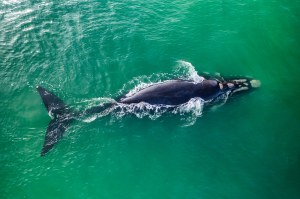
Given the amount of data that is captured in a Sea.AI Sentry or Watchkeeper system combined with a Brnkl Blue device, and how that data can be analyzed and securely stored, this technology stands to benefit anyone who wants to examine an event ex post facto. And, because most Sea.AI detections aren’t looming catastrophes, a Sea.AI and Brnkl Blue system can also be used for nice things, such as capturing and documenting imagery of whales.
As for my debris-strewn winter delivery to Seattle, there’s no question that a Sea.AI and Barnacle system could have helped me avoid finding those two branches, while also providing data-rich air cover just in case I had hit something more consequential.
Cloud-Free Recording
To capture onboard video and network data with military-level specs, consider Brnkl Black ($10,450). While the Black and Blue versions have similar hardware and identical Sea.AI integrations, the Black system’s architecture removes the need for a cloud and ensures that all data stays offline.