Water-jet drive
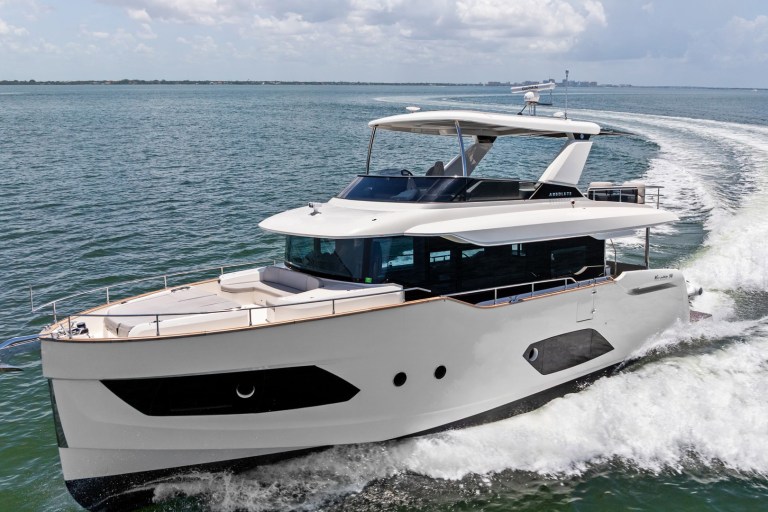
If you have ridden on a Fast Ferry (one that runs at speeds that may reach 50 knots), operated a “JetStick-controlled Hinckley Picnic Boat, run an outboard with no visible propeller or driven a Personal Watercraft (PWC), you have been water-jet propelled.
Today’s water jets are the end result of developments that date back to the first century B.C., when the Greek mathematician and scientist Hero of Alexandria built his aeolipile to demonstrate a principle of jet propulsion. (That’s force = mass x acceleration to all you Top Gun heroes.) William Hamilton (later, Sir Hamilton) developed the modern water jet in New Zealand in the early 1950s by modifying an American invention, the Hanely water jet, relocating the jet nozzle so that the stream of fast-moving water was expelled above the waterline, thereby eliminating all drag-inducing underwater appendages. Location was everything-the boat took off.
A water-jet drive provides a number of advantages when compared with the conventional screw propeller. The absence of propellers, prop shafts, support brackets and rudders reduces drag, making jet drives particularly efficient at medium and high planing speeds. Since the drive train can be contained entirely within the hull, a jet-drive boat can, when necessary, operate in water only a few inches deep. The water jet’s ability to propel a hull without an exposed propeller is what makes the PWC practical and can be a significant safety factor for people swimming near a boat, as well as for marine life.
Jet drives steer the boat with vectored (aimed) thrust, providing unmatched maneuverability, including the ability to precisely hold a boat in a fixed position against the effects of current and wind. The jet drive avoids the asymmetric thrust produced by propellers mounted on inclined shafts. The vectored thrust capability of a jet drive also provides efficient astern thrust (typically 60 percent of forward thrust) and instantly available reverse thrust for very rapid braking at any speed. The load imposed on the driving engine does not vary with boat speed or wave impact, protecting the engine from possible overspeed or overload. In high-speed applications jet drives can be quieter and smoother than propellers.
Today’s yacht may depend entirely on water-jet propulsion or it may use a conventional propeller drive with a jet providing an auxiliary power source for high-speed dash operation. One of the notable examples of this application was seen in the yacht Fortuna, built by Palmer Johnson for King Juan Carlos of Spain in 1979. Twin diesel-driven props were augmented by a gas turbine-powered water jet to propel this 100-foot yacht to more than 50 knots. In such installations the jet nozzle is fixed in position to deliver forward thrust. Water jets intended for use over the entire speed range of the vessel are fitted with steerable discharge nozzles and flow diverters to provide the vectored thrust needed for maneuvering. Some yachts are propelled by three jet drives, the two outboard units equipped with thrust vector control for steering, and the center fixed jet used when maximum speed is required.
Water jets are manufactured using a variety of structural materials, including aluminum, stainless steel and composites to match the wide variety of environments in which they are used. In a typical installation most of the jet-drive nozzle is aft of the vessel’s transom, allowing the engines to be placed far aft, which further reduces the intrusion of the power plant on the accommodation. In relatively low-power installations the jet’s pump may be directly coupled to the engine, with the flow diverters used to provide neutral thrust when the boat is stationary. However, this method has the disadvantage of churning up the water around the boat and, depending on water depth, the seabed. In most installations the water-jet drives are coupled to the driving engines through a clutch-equipped gearbox-both to allow the jet pump to remain stationary when the engine is idling and to properly match the engine rpm to the jet pump.
Jet-drive power ranges extend from well under 100 hp to the 33,000 hp GE gas turbine-powered Lips water jet (made by Wartsila, which also builds 108,000 hp diesel engines) installed in the 282-foot yacht Ecstasea. KaMeWa, a part of Rolls-Royce (turbine engines, not cars), offers jets with power ratings up to 50 megawatts (67,000 hp). Water-jet-drive systems require the same careful application analysis and testing as a conventional prop system. Critical evaluation areas include design cruise speed, matching the drive to the shape of the hull, and maneuverability requirements.
The water inlet design for high-speed boats is of particular concern, as it must prevent starvation of the pump at the top end of the speed envelope. The amount of seawater flowing through the inlet (usually through a 90-degree bend) to the jet’s pumping chamber can be quite substantial. A Hamilton HM series jet with an 810 millimeter (31.9 inch) diameter nozzle, powered by a 3,000 hp engine, will pump up to 5 cubic meters (11,320 pounds, 1,346 gallons) of water per second! (As has been proven in some flooding accidents, a water jet is an extremely effective bilge pump.) In a more modest application the 440 hp Yanmar diesel-driven model 292 Hamilton jet, installed in a 36-foot Hinckley Picnic Boat, will discharge up to 166 gallons, or 1,394 pounds, of water per second.
Pump designs vary to meet the jet’s application and include single and multistage axial flow and mixed flow designs. Special provisions are incorporated in pumps intended for use in very shallow water such as rivers, where ingestion of sand and gravel is a common occurrence. Jet designs routinely include various means for clearing materials that may obstruct the inlet or clog the pump; these include using the transmission’s reverse gear to run the pump backwards to blow the inlet clear. Other aids include moveable rakes and readily accessed cleanout ports. Debris clogging the jet’s intake is rarely a problem when the vessel is under way.
The development of electronic thrust controls exemplified by the JetStick used in the Hinkley Picnic Boat has boosted the popularity of water-jet propulsion. These systems operate by coordinating the movement of the jet’s nozzle, the position of the thrust-reversing buckets and the boat’s bowthruster to provide unmatched slow-speed maneuverability.
Cummins MerCruiser Diesel’s recent introduction of a jet-drive engine package provides evidence of increasing recognition of the value of water-jet drive. Factory-integrated diesel-jet systems are intended for both recreational and light commercial service with power ratings from 120 to 250 hp for use in boats up to about 11 meters in length. The first model, the 120 hp 1.7MJ, will be available this year. n
Contacts: Castoldi Water Jets, www.varriale.com. Cummins MerCruiser Diesel, www.cmdmarine.com. DOEN, www.doen.com (marketed by Twin Disc). Hamilton Jet, www.hamiltonjet.com. KaMeWa, www.rolls-royce.com/marine/product/propulsion/waterjets. Mercury Marine, Jet Outboards www.mercurymarine.com/mercury_jet. Twin Disc, www.twindiscpropulsion.com. Ultra Jets, www.ultradynamics.com.