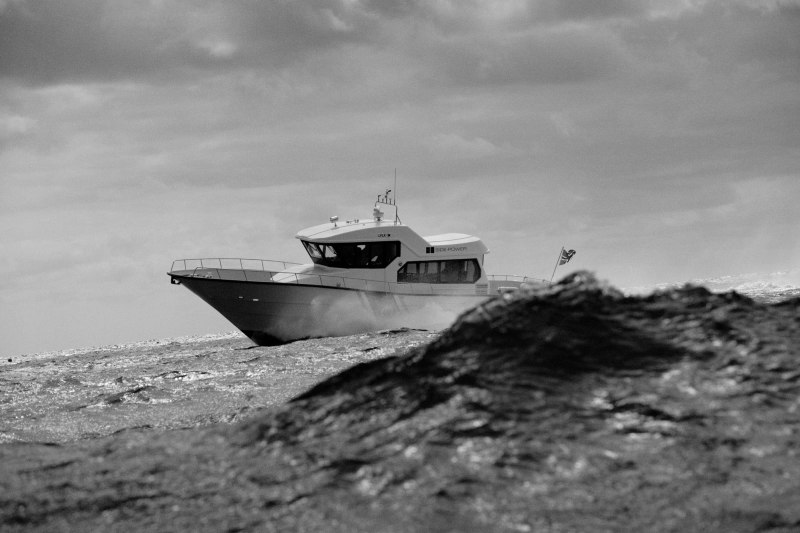
In the Norwegian town of Fredrikstad, perched along the Oslofjord’s breezy bends, boats have always been part of the cultural current. But near the water’s edge, something extraordinary has been taking shape. Sleipner Group, founded more than a century ago, has quietly evolved into a global powerhouse innovator in marine stabilization and thruster systems.
At the center of the company’s transformation is CEO Ronny Skauen, a man who blends a nation’s saltwater heritage and a personal passion for boating with a keen sense of engineering precision and a singular focus.
Skauen was born into a country and a family with a deep love of the sea. His family ran Sleipner Group. From an early age, he spent time on the water and around the workshop, absorbing the romance of the sea and the discipline of marine engineering. In 1990, he joined the family business full time. He was eager, curious and deeply committed to the idea that good design and smart thinking could genuinely impact how people experience life at sea.
During the next 30 years, Skauen worked his way up, combining a passion for boating with a knack for problem-solving. “Focus on understanding the core problem you wish to solve,” he says, “because you can often simplify both the problem and the solution to find a better way.”
That philosophy would guide Sleipner’s evolution from a regional supplier to an industry leader. Today, the company holds about 70 percent of the global market share for advanced thruster systems. It leads the field in roll stabilization with its Vector Fin technology. Sleipner has seven subsidiaries across Europe, distributors worldwide and more than 250 employees.
Unlike executives who lead from the boardroom, Skauen is most comfortable in the field, testing prototypes, listening to feedback, and docking boats in windy, rough conditions. He’s personally overseen the development of several products, including the electric eVision thruster series and the curved Vector Fin stabilizers, which won the DAME Design Award in 2013.
“Few people in the marine industry have spent as much time directly engaging with boatbuilders,” says Marius Torjusen, Sleipner’s chief commercial officer. “Ronny has a sixth sense for what owners and operators actually need, not just what the engineers think they need.”
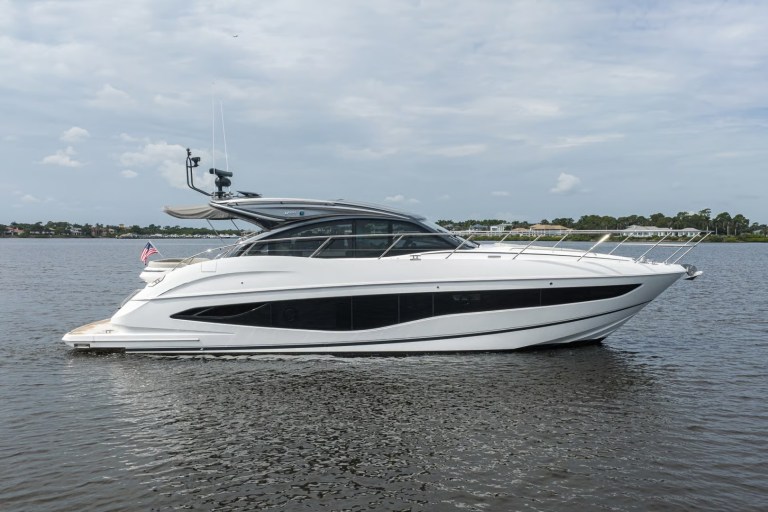
I spent time with Skauen at the helm of one of the company’s vessels, a 65-foot Fairline. In the cool breeze of the open-air flybridge, he spun the yacht into and out of a tight slip, opposing the wind and current, and explained how Sleipner’s products can greatly reduce seasickness by reducing a boat’s roll rate.
This was no sightseeing cruise—we were also performing research. With multiple computers and sensors gathering data, we ran the Fairline to a fairly bumpy spot offshore, then let the vessel drift with the wind and current. At intervals of five to 10 minutes, we would engage and disengage the fin stabilizers to see how they adapted to the ever-changing conditions. Later, these measurements could be used to adjust algorithms and produce an even better product.
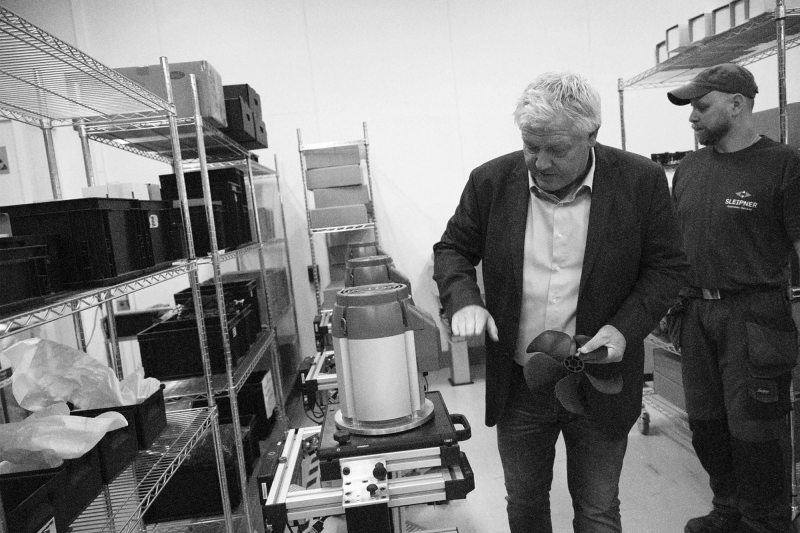
That on-the-water mindset is one key to how Sleipner develops and refines its products. In recent years, that focus has shifted toward energy efficiency and sustainability while still delivering performance. Electric systems are a growing share of the company’s portfolio, with heavy investment in research and development. It’s paying off: In the first quarter of 2025, the group posted year-over-year growth of 23 percent.
Sleipner’s name doesn’t appear on every transom, but it does sell products intended to make yachts better. Stabilizers that keep guests comfortable. Thrusters that make docking easier. Control systems that enhance safety and confidence. The company’s goal is to be invisible but indispensable.
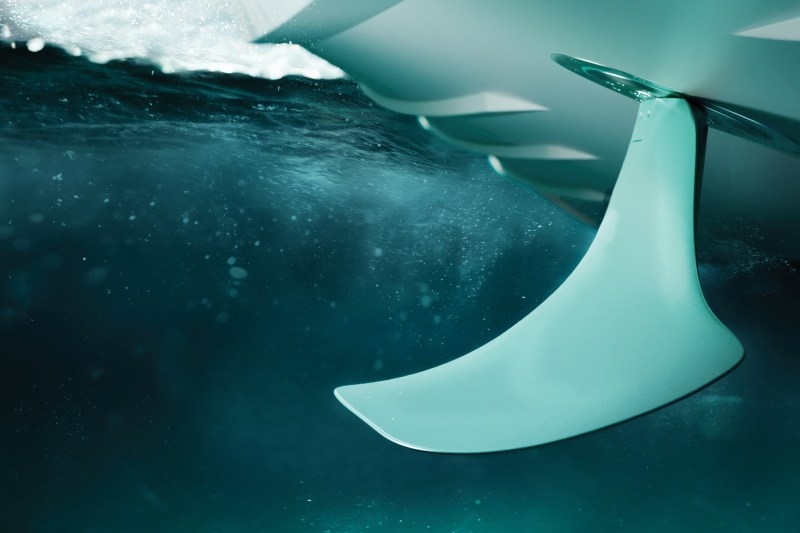
Sleipner’s Vector Fin stabilizers, for example, are curved, allowing the force of the water to be redirected around the hull more efficiently. This reduces roll and drag. On another Sleipner test vessel, the 56-foot Odin, the system delivered an 83.7 percent reduction in roll and a 97.5 percent drop in roll energy—all while using less power than a hair dryer.
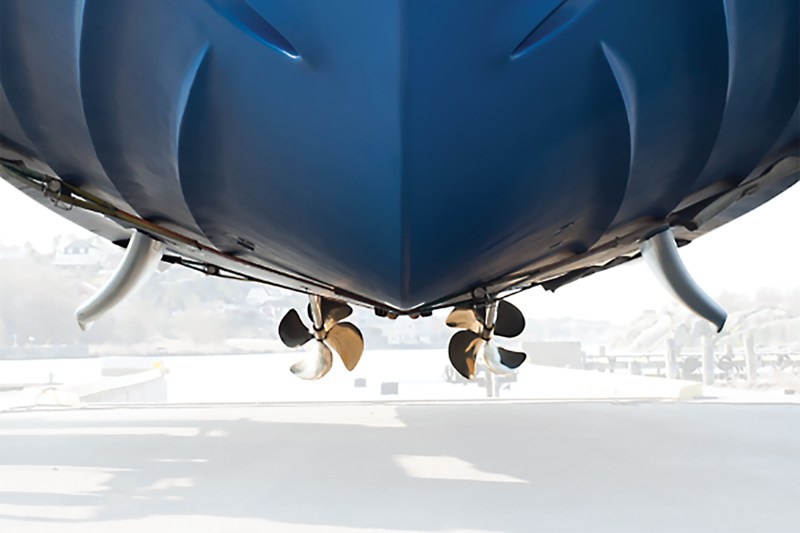
Sleipner’s eVision electric thrusters are similarly powerful. With unlimited run time, near-silent operation and electric motors designed in-house, these thrusters allow fingertip control at the dock as well as hold capability in wind or current. During a stop on our Norway expedition, Skauen eased up to a quay. He engaged the hold function, and the thrusters kept us planted silently with the touch of a button. Once our guests had disembarked, he disengaged the thrusters and pivoted away easily. The thrusters’ integration with intuitive user interfaces makes them particularly appealing to owners stepping up to larger boats or transitioning to hybrid-propulsion platforms.
Looking ahead, Sleipner sees its role as not just a hardware supplier, but also an enabler of the boating experience. That means helping boatbuilders integrate electric stabilization and maneuvering systems into vessels designed for the future as boats become even more energy-efficient and automated.
Sleipner wants to be the hidden genius behind every smooth ride. The company is developing systems compatible with hybrid and electric powertrains, as well as smarter energy-management platforms that let captains prioritize power based on real-time demands, from propulsion to hotel loads.
“Our goal isn’t to be on the radar,” Skauen says. “Our goal is to make boating so smooth and simple that you forget the technology is even there.”
It’s a quiet revolution, one that’s eminently fitting for a company whose best work is often felt more than seen.
On the Horizon
Sleipner’s systems currently integrate with energy management and hybrid propulsion, and it’s laying the groundwork for semi-autonomous operations. Smarter control systems, modular design and energy-conscious engineering are all expected components in Sleipner products going forward.
The Vector Fin
The hallmark of Sleipner’s stabilization system is its curved Vector Fin design. By redirecting the hydrodynamic lift around a vessel’s hull, the Vector Fin achieves greater efficiency with fewer side effects, like yaw or sway. The system works at anchor and underway, and with minimal power usage. It is also available in a DC electric version, which can provide active stabilization without the need to run a generator.