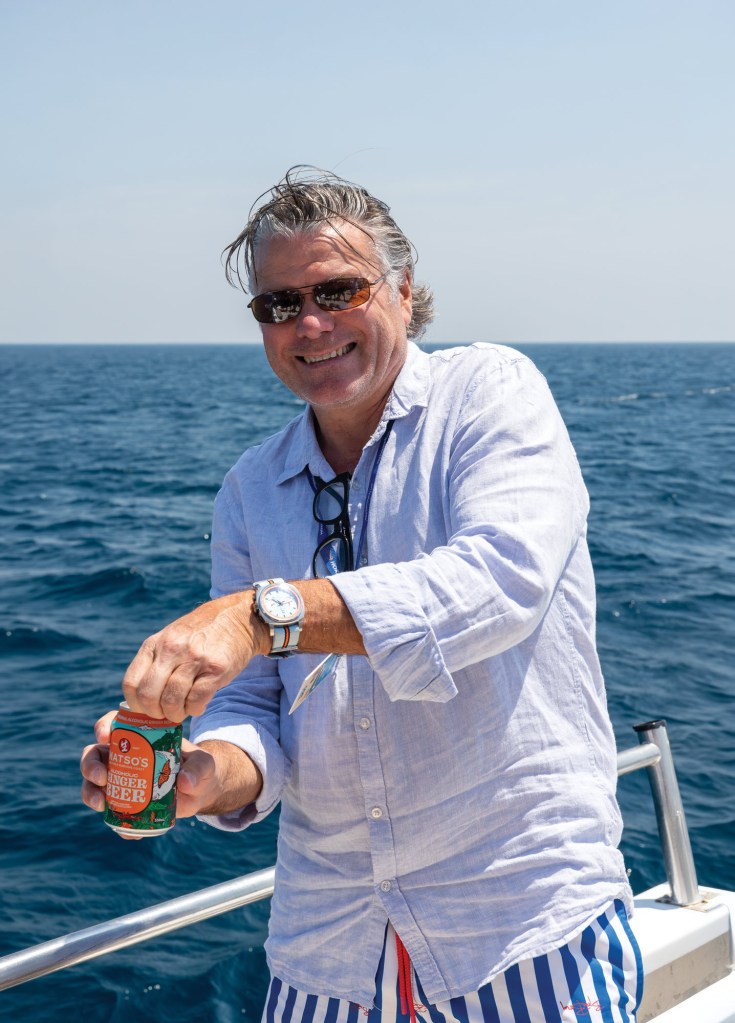
Cor D. Rover’s earliest memories are not of the land, but of the water. “I was born on a barge, which my father captained on the inland waterways of the Netherlands,” he says. “My first memories were the smell and the sound of the water, so that had a deep effect on my life.”
It’s a fitting origin story for a designer whose work has come to influence how modern yachts are conceived: not just how they look, but also how they live. How they feel.
Raised between bustling shipyards and pastoral farmlands in the Netherlands, Rover developed a dual fluency early on. “I always said I could weld metal plates and milk the cows equally well,” he says with a laugh. That mix of hands-on practicality and technical curiosity would come to define his approach to yacht design.
From Farm to Shipyard
He began with mechanical engineering before transitioning into naval architecture, initially drawn to the visual side of the discipline. “At first it was purely the aesthetics, the deck plans,” he says. “The interiors came next.”
Today, from his Rotterdam-based studio, Rover designs yachts that balance those instincts. Sound engineering is paired with spatial awareness and beautiful lines. And among his many collaborations, one stands out for its lasting impact: his work with Taiwan-based Horizon Yachts.
The Beginning of a Partnership
This collaboration, which would influence a substantial segment of the yachting market, began without fanfare. “My first meeting with Horizon was on a rainy Wednesday in Rotterdam,” Rover recalls. At the time, Horizon was an established builder with a growing presence in Europe and beyond. Rover saw an opportunity not to reinvent the brand, but rather to push one key idea further. “I wanted to help maximize the interior volume of their 24-meter platform with an on-deck master stateroom, among other ways,” he says.
Rover arrived with preliminary sketches and a clear concept. Horizon’s leadership, including president John Lu, immediately recognized the potential. “John is a visionary when it comes to yacht design, but he’s also pragmatic when it comes to the construction side,” Rover says. “He understands the pitfalls of building a very complicated motoryacht.” That balance— vision paired with real-world buildability—would prove essential. From that meeting, the foundation for what would become the Fast Displacement, or FD, Series was laid.
Rethinking Space Aboard the FD Series
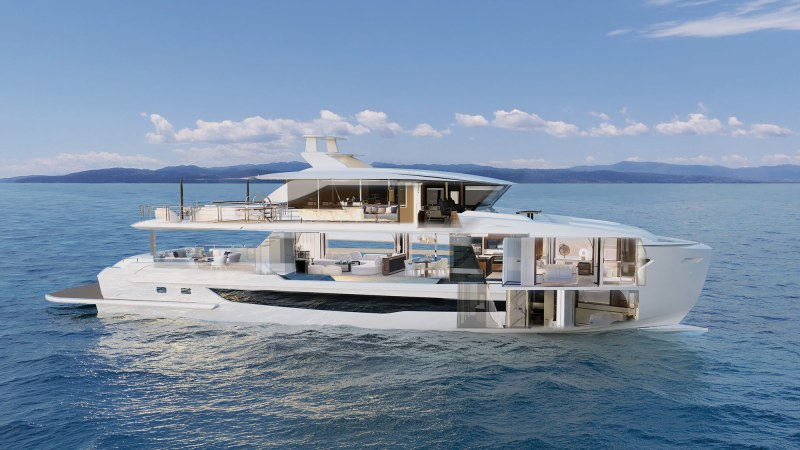
The premise behind the Horizon FD Series was straightforward in theory: to deliver more usable space within a given length. In practice, it required rethinking long-held assumptions about a yacht’s proportions and performance. For Rover, the driving force was not simply design experimentation but understanding a shift in owner expectations.
“The younger generation, I believe, wants the experience of yachting and the excitement of exploration, not necessarily ownership as a symbol of status or wealth,” he says. That shift placed new emphasis on how yachts function as living environments. Space was no longer a luxury but instead became central to the overall experience.
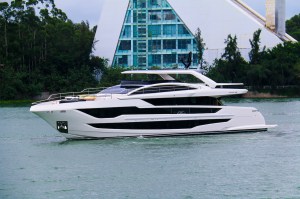
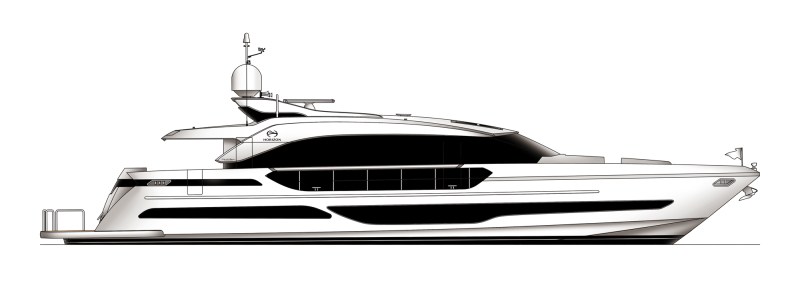
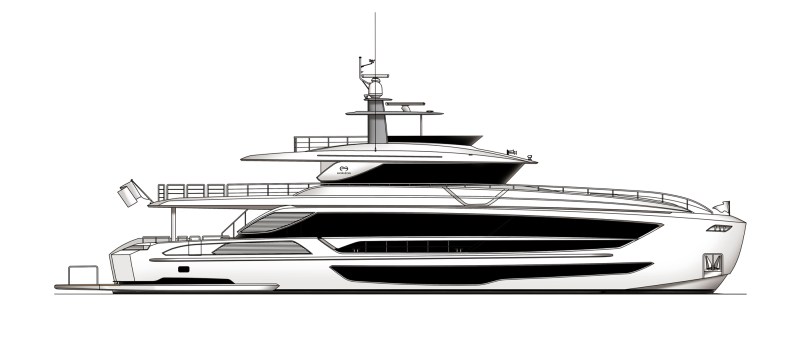
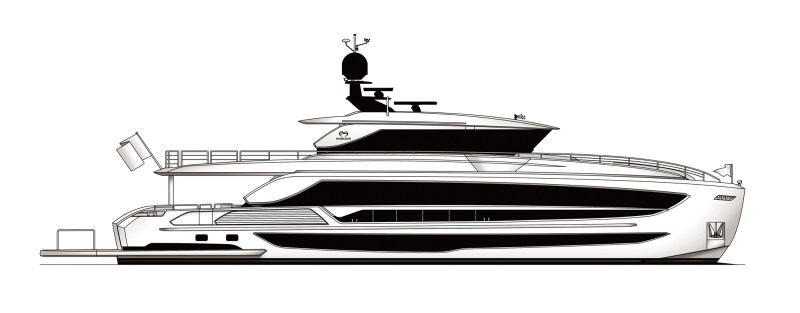
Working with Horizon’s in-house team, Rover helped to develop a platform that could support increased volume without sacrificing efficiency. The result was a combination of a beamy profile, a hybrid hull form and a distinctive bow designed to maintain performance across a range of speeds.
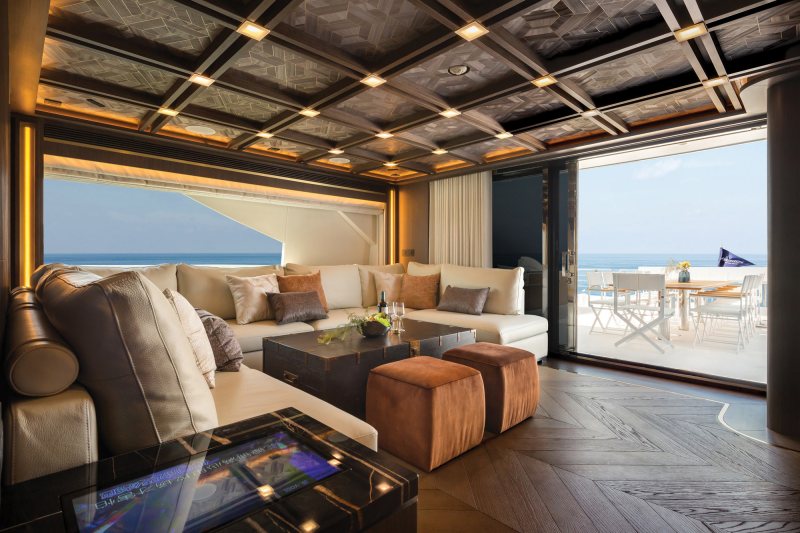
But the real breakthrough wasn’t technical. It was experiential. Owners who stepped aboard an FD yacht encountered something different. Natural light washed through oversized windows. Practical layouts encouraged flow between indoor and outdoor spaces. Horizon yachts felt larger than their measurements suggested.
Designing for Regional Markets
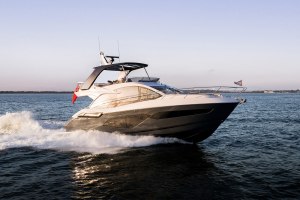
In key areas, that approach proved especially effective. “For the US and Australian markets, we knew they wanted as much volume as possible,” Rover says. “Europeans love their flybridge boats, but we added a skylounge to the raised pilothouse version, and it was really well received.” The ability to adapt the platform to regional preferences became one of Horizon’s defining strengths.
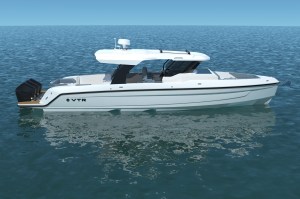
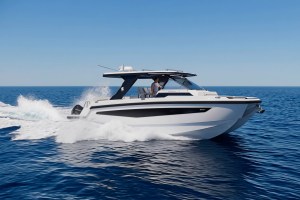
From the outset, the FD Series was conceived as a flexible platform rather than a fixed design. “Every FD is unique, and Horizon is a fully custom builder,” Rover says. “We’ve worked together on designs from the FD75 to the FD100, with plans for several others on paper, as well as the E Series sport yachts. No two are exactly the same.”
That level of customization is a differentiator and a challenge. Each owner brings a distinct set of priorities, from entertaining spaces and additional accommodations to more stowage for tenders and toys. Integrating those requests requires constant negotiation between design intent and engineering realities, and a collaborative process between designer and builder.
Rover’s role is less about imposing a signature style and more about translating ideas into workable solutions. The FD Series has evolved organically as a result, with new configurations and models emerging from individual client requests. What began as a single concept has grown into a range that continues to expand in size and capability.
The Craft Behind the Technology
For all the advances in design tools, Rover remains grounded in the fundamentals of the craft. “The hardest part of yacht design is when people think a computer can do it all,” he says. “That’s even more true today with the rise of AI. A computer program is a tool, not a decision-making entity.”
His perspective is shaped by his experience in an earlier era of boatbuilding, when design and construction were more directly intertwined. “When I started my career, it was often the guy on the lofting floor welding the plates together that influenced the design as much as anything,” he says. Today’s technology offers far greater flexibility, but it also introduces misconceptions about the design process. What hasn’t changed is the importance of understanding materials and structure. Advances in glass technology, for example, have enabled larger windows that transform the onboard experience. “With today’s much stronger glass, we can have windows which are quite large and create a visual connection to the sea,” Rover says.
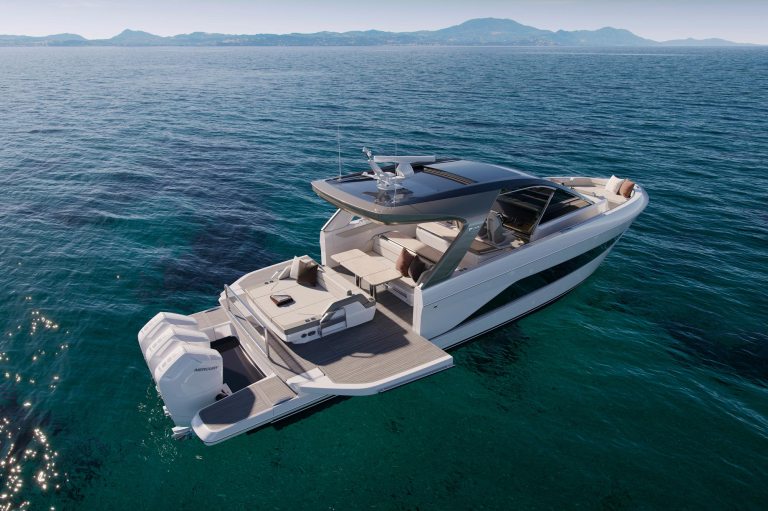
Similarly, features like drop-down platforms and transforming beach clubs extend that connection physically, blurring the boundary between yacht and environment. “These elements create a physical connection,” he says. “That’s very important with today’s clients who want that experience.”
Built for Exploration
If the FD Series is defined by space, it is equally shaped by how that space is used. Rover points to Australia as a key influence in this regard. “I love the way the Australians use their boats,” he says. “They enjoy exploring all of these very remote and distant locations, and they’re not afraid of rough seas, or even crocodiles along the way. It’s all part of the experience.” It’s a mindset that aligns closely with the capabilities of the FD platform. “These kinds of people are a different breed,” he adds, “but they are perfect for the kind of yachts we’re building at Horizon, which are rugged with more room for tenders and toys, ready to explore.”
Looking Ahead: Hybrid and Electric Power
As the industry evolves, Rover sees parallels with another rapidly transforming sector: automotive. “I think the future will mirror the auto industry,” he says. “The shift to hybrid power depends on factors like range and performance.” Rover expects a similar trajectory in yachting, particularly as infrastructure and technology continue to develop. “When commercial trucking goes electric, boats will follow,” he says. The challenge, as always, will be integration as well as balancing new systems with existing expectations for performance, range and onboard comfort.
For Rover, the enduring appeal of yacht design lies in the balance of constraint and possibility. “The most exciting part is the freedom,” he says. “You’re not limited by anything other than the laws of physics and the regulations of the industry.” Within those boundaries, the possibilities are wide open. “Nobody is telling you how it should look,” he adds. “That’s up to you.”
It’s a philosophy that has guided his work from the beginning, from early sketches to fully realized yachts. In his collaboration with Horizon, that freedom has been channeled into a clear and influential idea. Space—how it’s created, how it’s experienced—can define an entire category.
What started on a rainy Wednesday has since become one of the most recognizable platforms in modern yacht design. And, like those inland waters that first shaped his design perspective, it continues to flow.
FD Series at a Glance
Since its introduction in 2016, the FD Series from Horizon Yachts has reshaped expectations in the 75- to 100-foot-plus segment, and continues to push upward in size and ambition. The series centers on a simple but disruptive premise: Maximize interior volume without sacrificing performance. That idea is realized through Horizon’s fast-displacement platform, including its High-Performance Piercing Bow and hybrid hull form, which together deliver efficiency, stability and a smoother ride.
Design Philosophy
For Cor D. Rover, design begins not with aesthetics, but with interpretation. “Design is not about imposing a style—it’s about translating ideas,” he has said, a philosophy that underpins his long-standing collaboration with Horizon Yachts. Rover views technology in much the same way. Computational design and tank testing inform the process, yet final decisions remain rooted in human judgment and experience. The goal is not innovation for its own sake, but innovation that enhances how people actually use a yacht.