Back in the mid-1990s, I had a summer gig running the race-committee boat for a Connecticut yacht club’s midweek sailboat races. The job was cush, but I dreaded docking the club’s old cabin cruiser afterward. The dock was usually dark, the boat lacked thrusters, and the club members who volunteered to help me were typically several libations deep by then. This combination of factors placed all responsibility on me, a college kid who was far more comfortable racing sailboats than docking a heavy, single-screw powerboat. I always got the job done, but it wasn’t graceful, and I remember wishing that I could hand this responsibility off to somebody (or something) else.
History didn’t record the first “dockmare,” but high-consequence maneuverings are a time-honored nautical friction point. And while Simrad’s AutoCaptain isn’t the first sensor-based autonomous docking system, it is the first one created by a company that builds everything from steering and propulsion systems to sensors and multifunction displays. This capability ensures systemwide integration while facilitating over-the-horizon developments.
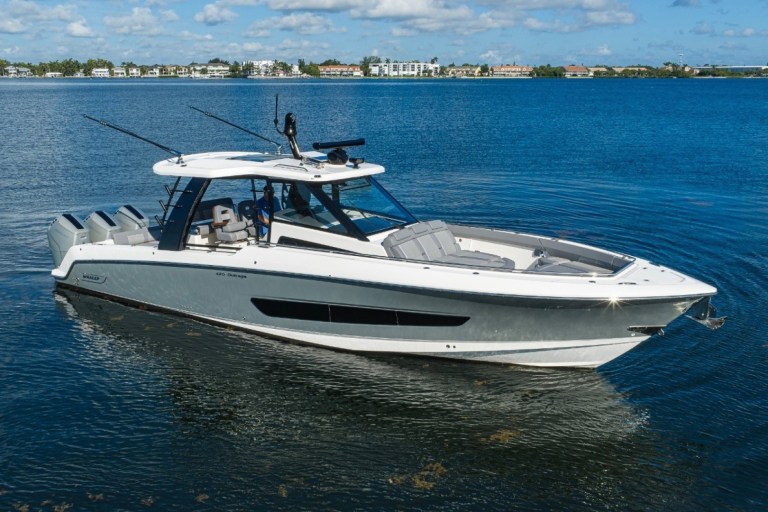
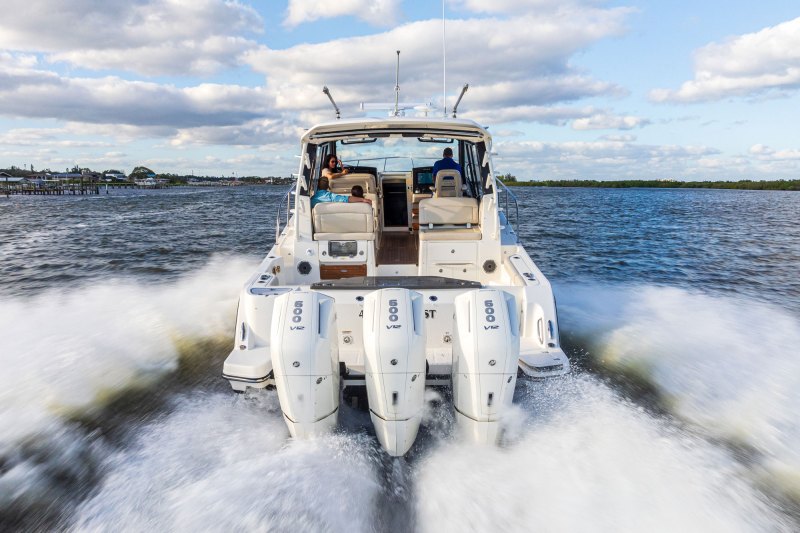
Currently, AutoCaptain is only available aboard the Boston Whaler 405 Conquest. Brunswick Corporation plans to broaden availability to other new builds; the company also owns Navico Group, which in turn owns Simrad Yachting.
“There’s no aftermarket. There’s no dealer install,” says Jeremiah Clark, Navico Group’s vice president of product management for electronics solutions. “The only way to get this is with a new boat.”
Clark calls AutoCaptain an expandable system. It currently does three things: dock, undock and execute slow-speed, short-range maneuvers. AutoCaptain also works in open waters, but its speed and range capabilities don’t change.
Brandon Ferriman, Brunswick’s senior director of program management, describes AutoCaptain’s current autonomous capabilities as level two-plus on the National Highway Traffic Safety Administration’s six-tiered scale. “It’s hands-off, but you’re at the wheel,” he says, adding that AutoCaptain enters standby mode (think autopilot) if its human operator overrides the system.
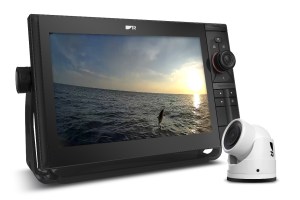
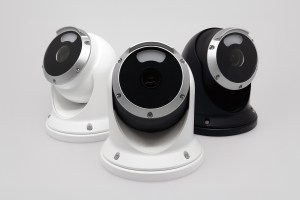
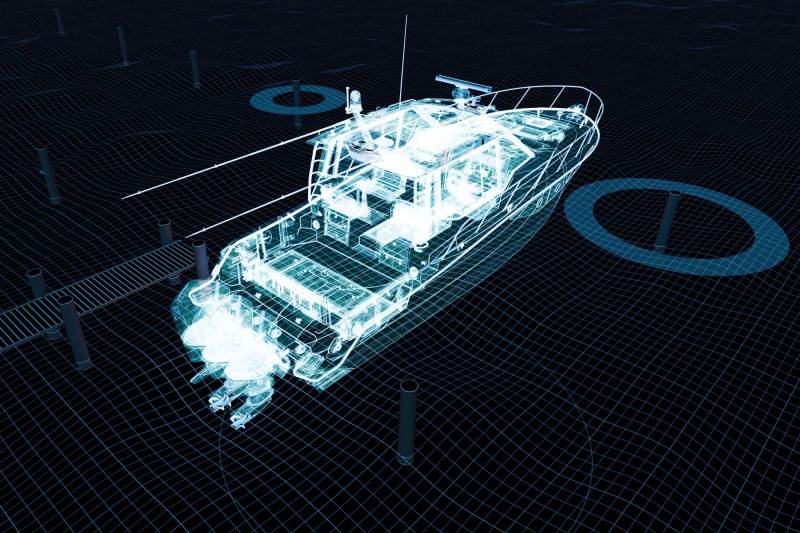
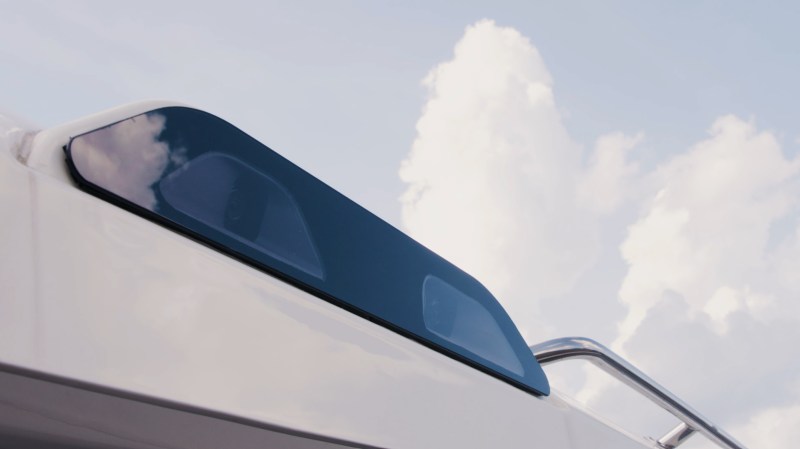
Hardware-wise, a 405 Conquest’s AutoCaptain installation involves six stereo cameras that are installed in the hardtop to provide 360-degree visibility. There’s also a black-box processor; at least one Simrad NSO 4 or NSS 4 multifunction display running the AutoCaptain app; a global navigation satellite system receiver; at least two compatible Mercury outboards; and Mercury’s Joystick Piloting system.
A bow thruster can be, but isn’t always, a requirement, Clark says, adding: “Anything you can do with a joystick outboard, you can do with AutoCaptain.”
On the software side, the system includes the app, two main algorithms (one for detecting non-water objects and one for route planning) and two kinds of AI: machine vision, which allows AutoCaptain’s processor to “see” above-the-waterline objects in its video stream, and machine learning, which allows AutoCaptain to learn without explicit programming.
“We’ve taught it what are boats, what are docks, what are obstacles in the water,” Clark says. “But over time, the more of those things it sees, the smarter it actually gets.”
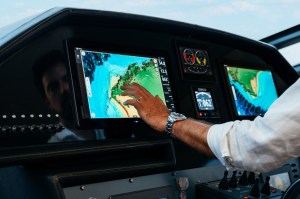
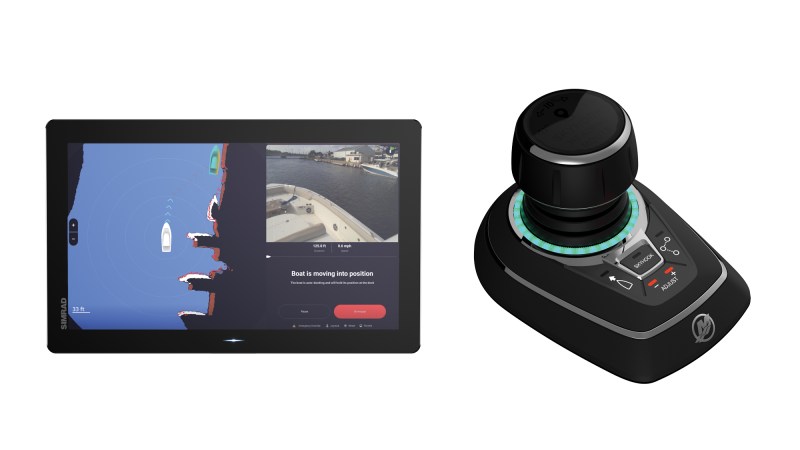
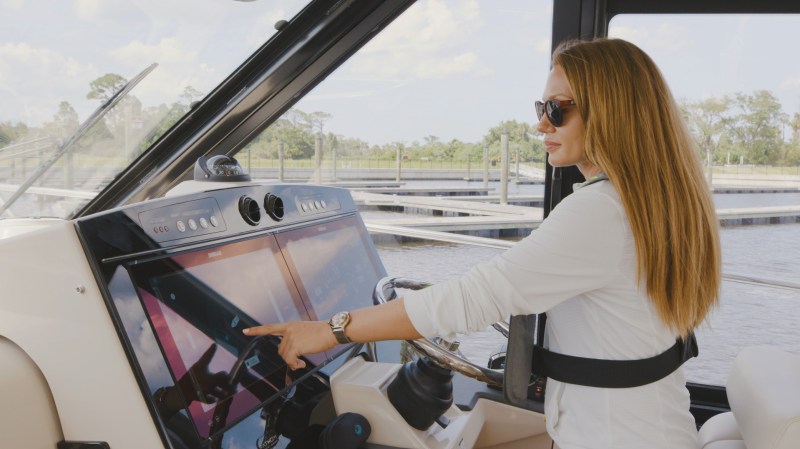
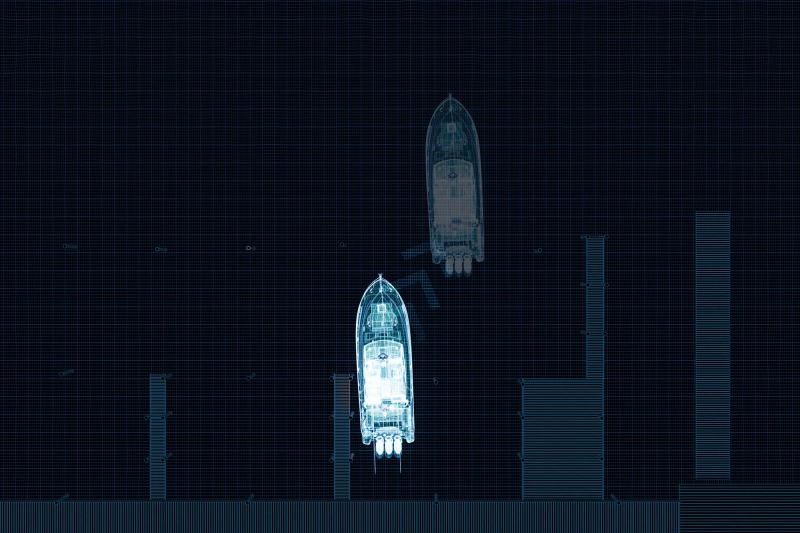
To use AutoCaptain, operators open the app, acknowledge that they will remain helmside, and use the touchpad to tell the system where and how to position the yacht (such as: in a slip to starboard with the bow facing outward). The app’s screen is split into three panes: a camera-created vector map of the vicinity occupies the port two-thirds, while the starboard one-third is split between a live camera view showing the yacht’s direction of travel, and a dialog box with “disengage” and “pause” buttons.
The pause button is interesting. “It’s a Skyhook-like feature that’s controlled by the autonomy system,” Ferriman says, referring to a similar Mercury feature. Once engaged, AutoCaptain’s pause mode holds the yacht’s orientation and position to within a meter. Call this the time-out option.
Additionally, AutoCaptain enters standby mode if its human operator interacts with the yacht’s steering wheel, joystick or throttle controls, or taps the “disengage” button.
Behind the scenes, AutoCaptain’s cameras create a video stream that’s sent to its processor, which determines if there are any objects around the boat (not just in its direction of travel). The system uses the vessel’s joystick system to execute operator-generated commands and avoid obstacles. If AutoCaptain detects a possible collision, it will recalculate a new route; if it’s unsure how to proceed, it will enter pause mode and eventually hand control back to its operator. When it completes docking, its dock-hold function buys its operator time to secure the docklines.
While AutoCaptain’s user interface looks intuitive, its undergirding technologies—starting with its cameras—are advanced.
“We went with stereo cameras for their accuracy and [ability] to calculate distance and depth of the field of view,” Ferriman says. “That’s how we as humans can see how far away things are.” The cameras, he adds, only require small amounts of ambient light to operate.
AutoCaptain also uses its cameras to create a kind of user-generated map of the surroundings. “They’re mapping everything around them, and placing the objects they see in that map,” Ferriman says. “And that GNSS device knows where we are in the map.”
The map is built ground-up the first time a yacht visits a marina, but AutoCaptain’s onboard storage and machine learning means that its efficiency increases over time. “The system keeps the map, and the more times you visit a place, the better that map gets,” Clark says.
As mentioned, Mercury’s Joystick Piloting system is AutoCaptain’s steering and engine-control authority, and can also overcome wind, current and tide. “The joystick system is really what enables the motors to go in different directions, different RPMs, different gears, and using those varying kinds of thrust and vector thrust,” Clark says. “You can actually scoot the boat in different directions: sideways, forward, back.” Traditional steering wheels and throttles, he says, don’t offer the right input controls.
Ferriman says Mercury’s Joystick Piloting could theoretically also control its sterndrive engines. But, he says, “we haven’t done that yet.”
Clark adds: “We’re going to keep investing and iterating and adding features and functionality.” Future features, he says, will come via software updates, not new hardware. These updates could also allow AutoCaptain to leverage other onboard sensors, such as forward- and side-scanning sonar, Doppler-enabled radar and Automatic Identification System transceivers. “We’re open to looking at other sensor technologies,” Clark says. “And we don’t need a license to talk to our own sensors.”
As for target audiences, Clark says AutoCaptain approaches the market at both ends. “You’re really targeting two kinds of boaters,” he says, noting that AutoCaptain can make boating more accessible to beginners while augmenting experienced boaters’ skills.
Clark describes AutoCaptain as a high-end system aimed at premium midsize builds. “It’s not necessarily something you’re going to see on a small runabout,” he says. Part of this targeting comes down to cost, but practicality also counts: Smaller boats often lack hardtops for cameras.
As for scaling up to superyachts, additional cameras can be added, but AutoCaptain’s prerequisite Mercury integration could be a limiting factor. “I’m not saying that there’s nothing in the autonomy stack we couldn’t apply later,” Clark says. “But the immediate roadmap is that this is a Mercury feature.”
Brunswick’s vertical integration could also act as a force multiplier for future developments. Additionally, AutoCaptain’s pause mode can lower stress levels, and Brunswick’s walled-garden approach (think Apple) eliminates circular firing squads for owners if headaches arise. As just one example, Mercury’s G3 Service Tool can diagnose AutoCaptain problems.
That said, AutoCaptain isn’t currently trained on COLREGS, nor does it deliver the same level of higher-speed and longer-range collision avoidance that other systems do. And, there’s the argument about overreliance on technology, especially among greenhorns, though there’s nothing stopping AutoCaptain owners from manually practicing docking’s dark arts.
So, for yacht owners considering a new Mercury-powered ride, AutoCaptain is worth exploring. As for my race-committee-boat days, the odds are excellent that AutoCaptain would have alleviated several of those day-after conversations with my boss regarding a few of those topsides scuffs.
Take the next step: simrad-yachting.com