The past year has been chock-a-block with new yachts, technology, gear and services across the yachting universe. The Yachting staff has traveled far and wide around this big blue marble to see it all and bring it to you across an astonishing 787.5 pages of editorial coverage over 12 issues. And yes, we totally used that 0.5 pages too.
From Cannes, France, to Seattle and all points in between, we go where all the new stuff is so we can see it, feel it, touch it, use it and drive it.
And now, it’s time to look back across those pages and call out the products that caught our eye. Time to recognize those who leveled up. From the practical and cool to the wow and the whizbang, we engaged with it all to find the best of the best.
What follows is our list of the past year’s favorites. It’s completely subjective, and maybe your favorite new thing isn’t here. That’s cool. If you think we missed something, drop us an email. We would absolutely enjoy putting together a Yachting Readers’ Choice List and sharing it with the world.
It was no easy task to whittle down our nearly 800 pages into 14 boatbuilders and boats, and 14 other companies and products. Some could’ve gone either way. Some just missed the cutoff deadline, but they will be considered next year.
The harder part is choosing just one of these deserving 28 winners as the overall Yachting Innovation Award Winner for 2025. This is an annual award that our team gives out at the Fort Lauderdale International Boat Show. Our winner will be featured in the January issue.
Do you recall last year’s winner? It was the Ferretti Infynito 90, which is a yacht that reinvented what a motoryacht foredeck could be. That evolution in thinking, in addition to open, ultra-luxe interiors, pushed the design envelope.
There’s a line in a 1980s movie where the lead character says, “There can be only one.” Which of these winners will be the one? We’ll see soon, and be sure to let us know your favorite.
Check out part one of this year’s Editors’ Choice Awards: Yachts
Axopar Accessories
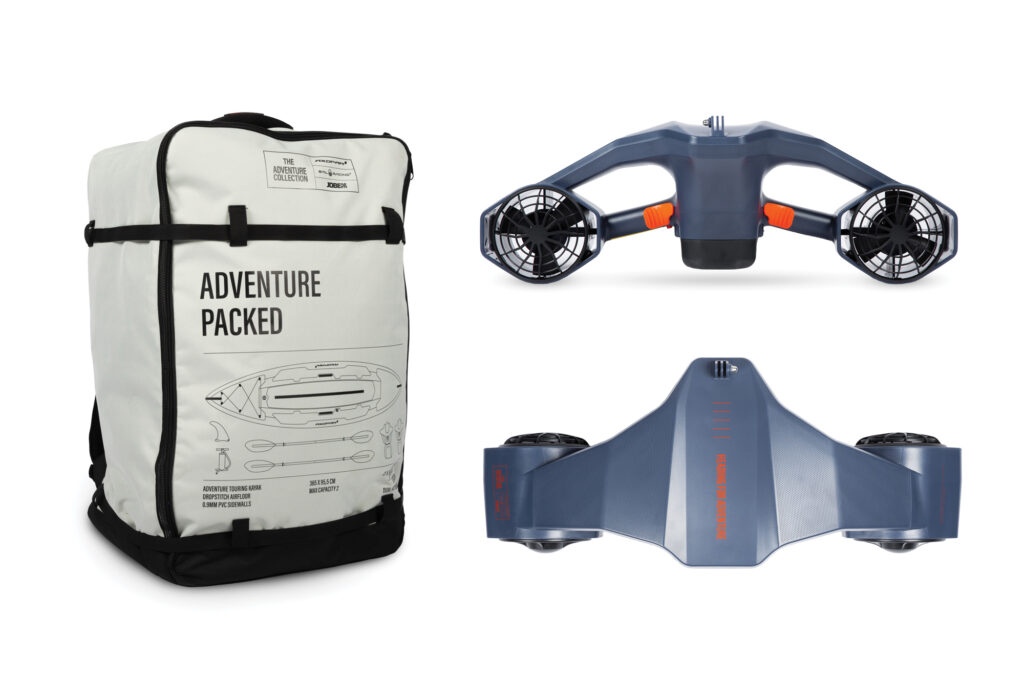
Axopar has carved out a niche with boaters—called adventure boating—via its line of purpose-built, outboard-powered dayboats. They range from 22 feet to 45 feet length overall. The boatbuilder now offers a one-stop shop for adventure-boating accouterments with the Axopar Collection. Whether boat owners are seeking branded cooler bags or dry bags to take in the tender, or are looking to add to the watertoy arsenal with an underwater scooter, an inflatable kayak or a packable stand-up paddleboard, Axopar is offering options that make sense out on the water. Especially for boaters who like to play all day.
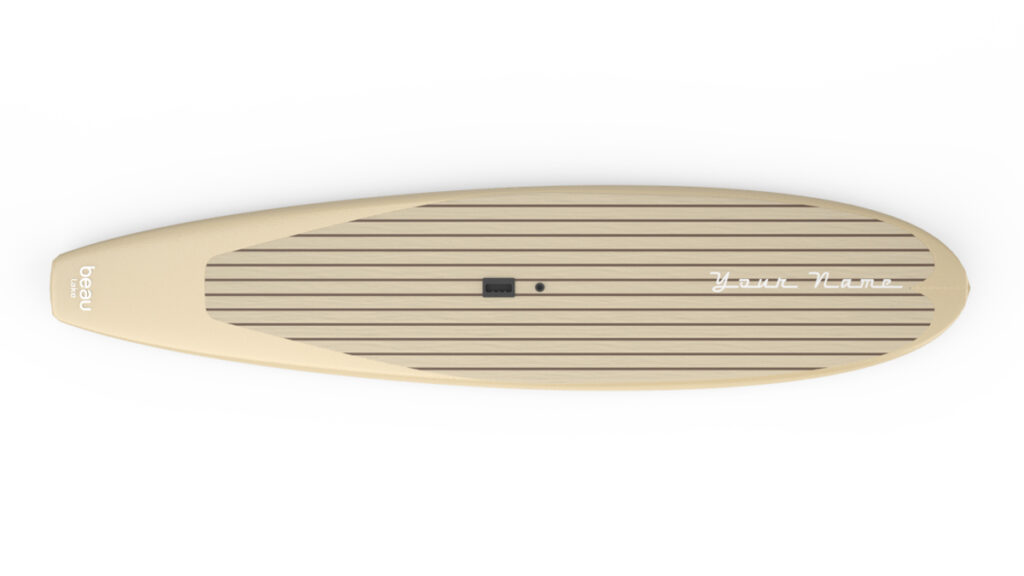
Beau Lake Paddleboards
The creative team at Beau Lake felt that most stand-up paddleboards lacked good looks, character and personality, so the company set out to reimagine the modern SUP. Beau Lake’s series of stand-up paddleboards come in myriad shapes and sizes, solid or inflatable. A majority of the solid boards are constructed with EVA foam under wood veneers, with The Rapid model built in carbon fiber and veneer. Pricing for the SUPs range from around $1,150 to north of $5,000. The custom model seen here starts $4,900 and uses a combination of white oak and mahogany. Average build time is about a week.
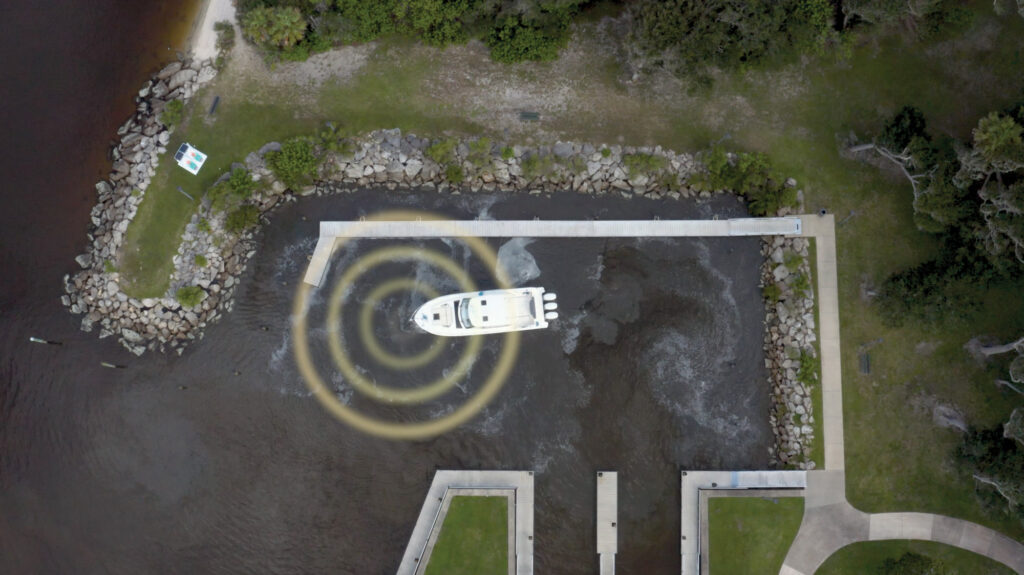
Boating Intelligence
Brunswick’s Autonomous, Connected, Electrified, Shared (ACES) initiative has evolved with the launch of Boating Intelligence, a strategy aimed at making boating more inclusive and user-friendly via AI. The Boating Intelligence Design Lab is solving real-world challenges by turning boats into interactive partners that deliver real-time information. The goal is to help users interpret data and to guide them, flattening the learning curve. A future example could be helping owners interpret sonar or radar returns, and thus better understand how these instruments work. This tech could also help with conditional autonomy when it comes to tasks such as docking. Overall, the idea is to make boating as a sport more accessible to more people.
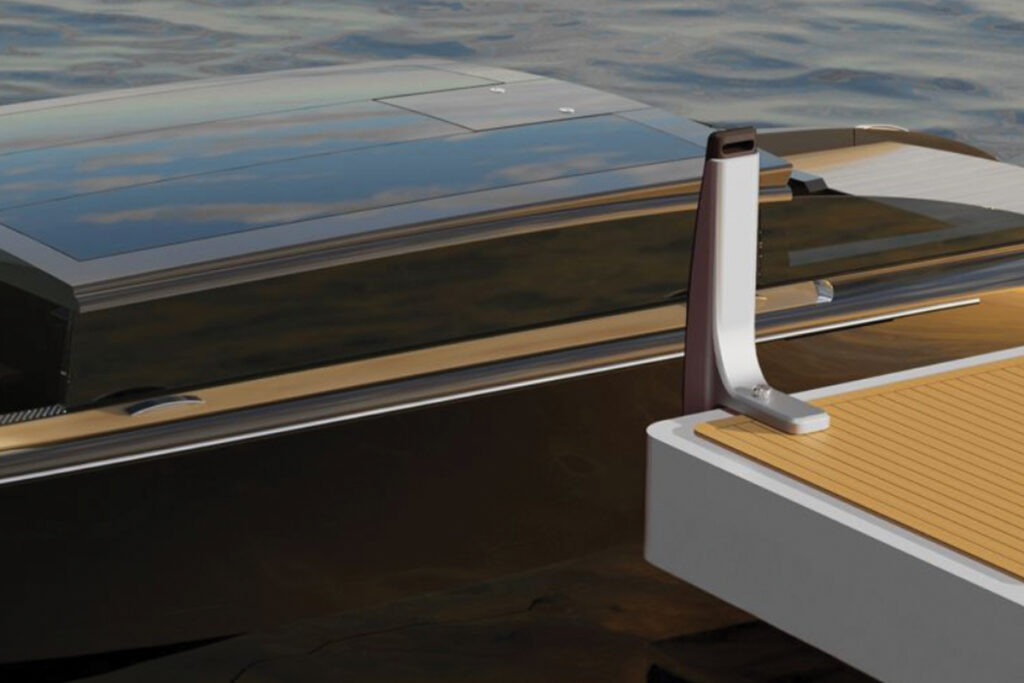
CarbonCraft Components
Founded in 2022, Carboncraft is a company focusing on yacht products that are most commonly afterthoughts in terms of styling. Carboncraft makes things like fenders, awning systems, swim ladders and passerelles. All of its products are carbon, made in three styles. The inner body is always the same, but the outside can be a clear coat that lets the carbon fiber show through (think auto industry). It can also be covered in another material, such as teak veneer, or any color the yacht owner desires. Carboncraft’s products are also built to order, so if an owner wants the accessories to match the boat, it’s not a problem. For example, Carboncraft recently built an array of products to match the baby-blue color of a superyacht.
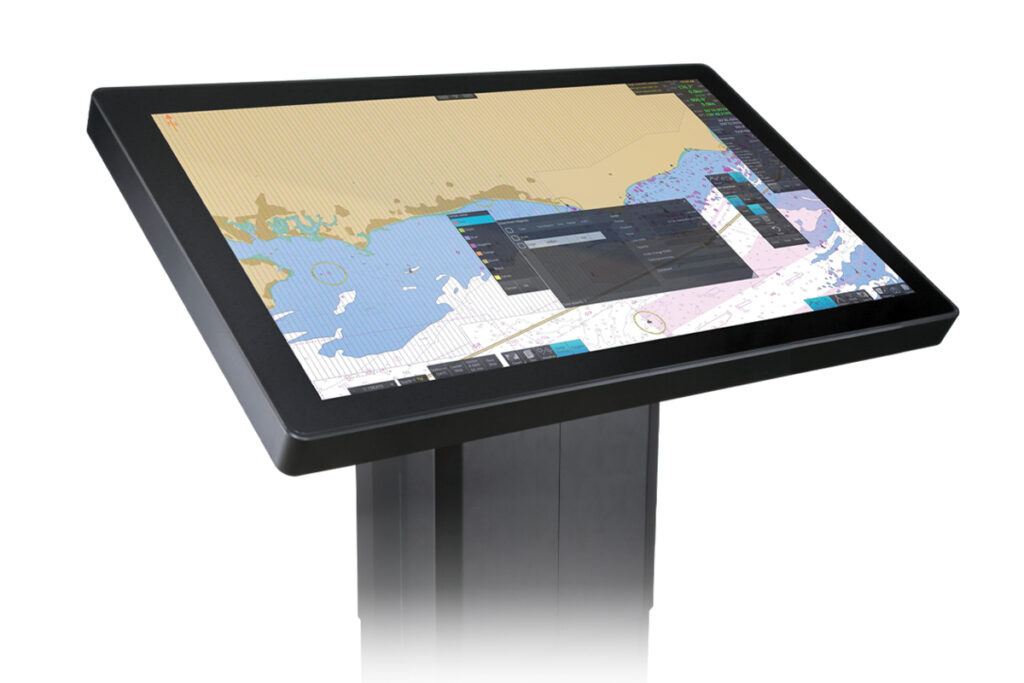
Furuno PS-100
The Furuno PS-100 brings together the best of electronic navigation with a traditional chart table. It’s pretty cool. The Furuno’s PS-100 planning station is available in three screen sizes: 32 inches, 43 inches and a pedestal-mounted 55-inch display. All of the screens have 4K resolution. The system is primarily designed for vessels using International Hydrographic Organization-approved electronic charts on ECDIS (electronic chart display and information system) equipment, rather than for recreational navigation gear like multifunction displays. That said, there’s never enough navigation information out there on the water. Boaters can plan their cruises on a PS-100 and then manually transfer the routes into a Furuno NavNet TZtouch MFD.

G3 Acoustics Speakers
When the Yachting staff stepped aboard a Galeon yacht and noticed sound coming from everywhere, but couldn’t see one speaker, we were baffled. Until we learned the yacht’s headliner was the speaker. G3 Acoustics works with high-power, low-distortion transducers that turn interior headliner panels into planar radiating speakers. Traditional speakers usually rely on magnets and voice coils to drive sound-producing speaker cones. G3 Acoustics uses a series of small, lightweight transducers bonded to the backsides of headliner panels. These transducers each weigh about 3.2 ounces and include neodymium magnets that vibrate when they receive signals from the stereo, turning the panel into a speaker.
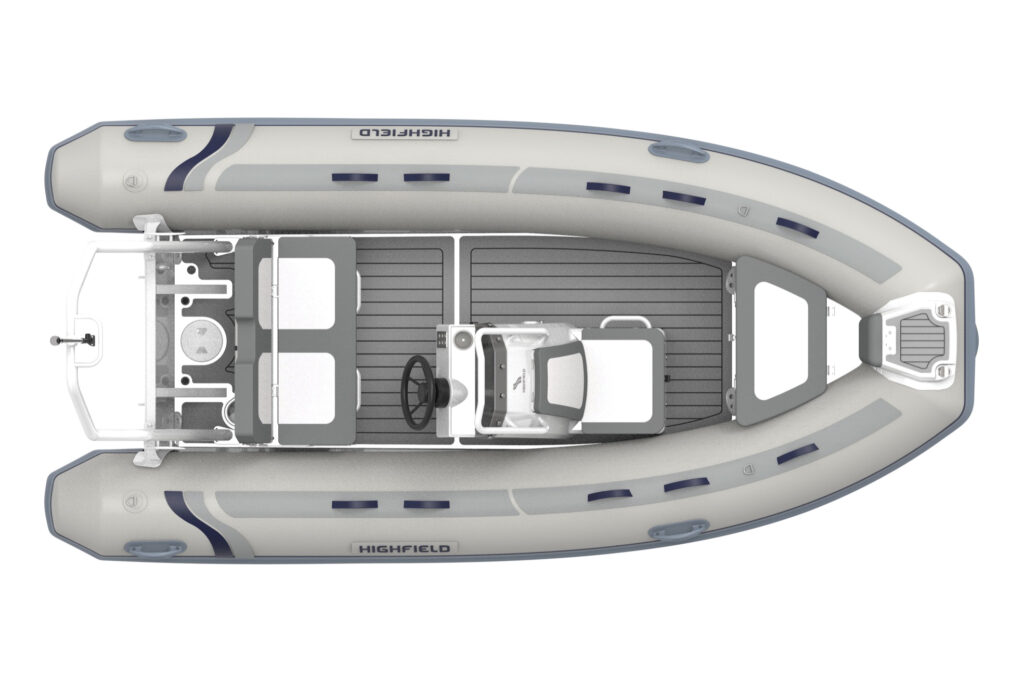
Highfield Classic 400
The Highfield Classic 400 is a 13-foot RIB with a stout aluminum undercarriage that’s paired to Orca Hypalon (or PVC) tubing. Power comes via a single outboard up to 50 hp, with a 20-degree deadrise for a smooth ride in the chop, a full-length keel guard for heading to the sandbar, and a rubbing strake for docking. The Classic 400 can be set up as an open boat or with options such as Highfield’s FCT XL open helm or the company’s SDS helm and built-in forward seat. It’s available in black, dark gray, light gray and white, all of which come with a brushed-foam teaklike deck, a dry bag, lifting points and towing eyes.

Stephens Waring Tender
The client had specific boating needs: an eco-conscious electric cruiser that could make regular crossings from its home port to the mainland. The answer was the Stephens Waring 8.5m Electric Commuter. To make the tender lightweight, the 26-foot-3-inch hull is built from fiberglass-clad cedar strips, while its deck and cockpit are constructed from a sandwich of plywood and foam. The boat’s sleek profile is reminiscent of 1950s Rivas, but the Stephens Waring 8.5m Electric Commuter is propelled by a thoroughly modern 40-kilowatt RAD Propulsion electric motor and a 55-kilowatt-hour Fellten battery. The boat has a reported range of around 22 nautical miles at top hop, and the battery can be fully recharged in about 60 minutes.
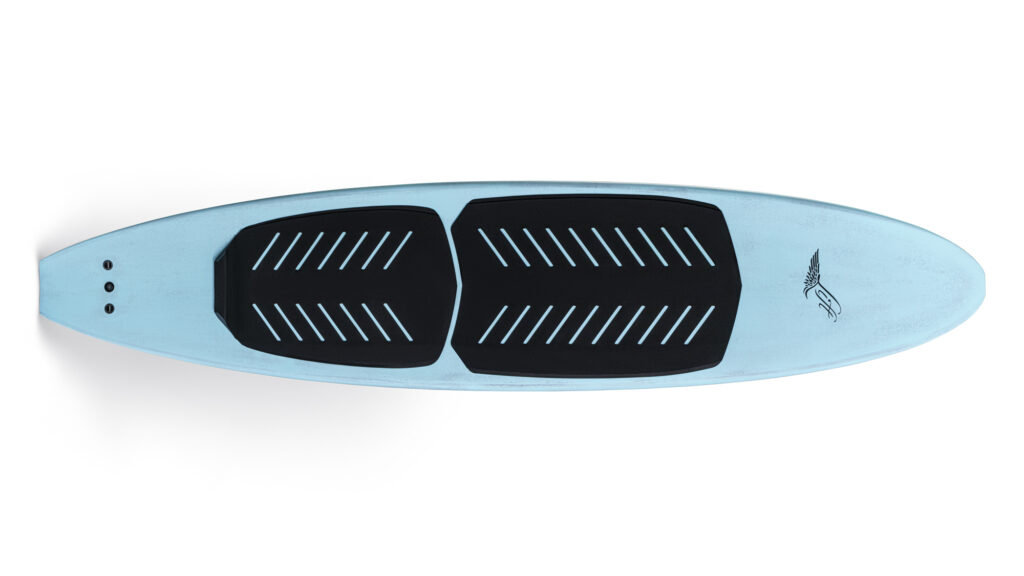
Lift Foils Flying Cat
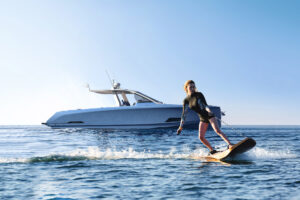
The truth is that harnessing the power of the ocean and riding on a foil board can be serious fun, but the learning curve can also be steep. The Flying Cat was created to make it easier to get up and foil. The board’s catamaran-style hull is designed to help riders get up on the foil faster, with less paddling at the start. The board’s added stability helps achieve this goal. Nick Leason, LiftFoils CEO, says, “You have to paddle like hell to get a little bit of speed and get that board to take off. Once you’re on the foil, you need to stay on the foil by connecting all the swells. But the results are amazing.” Riders can reach speeds of 17 knots too.
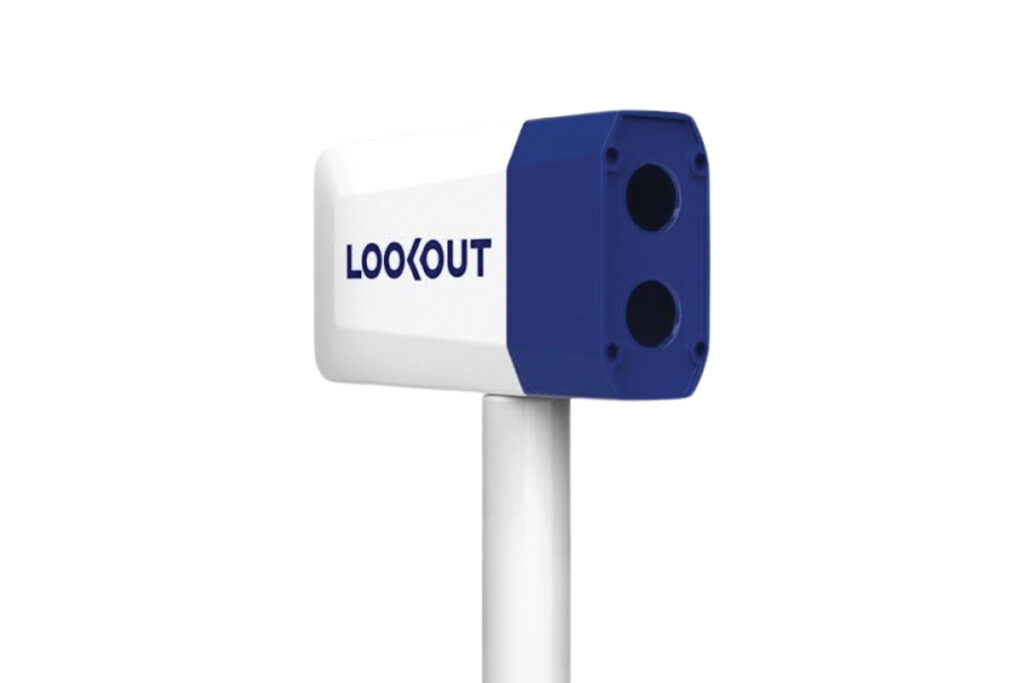
Lookout AI
Lookout isn’t a tech that autonomously dodges detected targets or navigational hazards, but it does combine AI, a camera, the automatic identification system and cartographic data to provide up to 360-degree situational awareness with collision-avoidance alerts. Processor options are called the Brain and Brain Pro. The Brain is aimed at smaller vessels, and the Brain Pro at larger yachts. Once a target is detected, Lookout tracks it using three types of AI computer vision to identify it using a network that’s been trained and tuned for boating. Lookout systems also use AIS data to detect targets. Given the human tendency to tire during passages, Lookout could be a welcome helm companion.
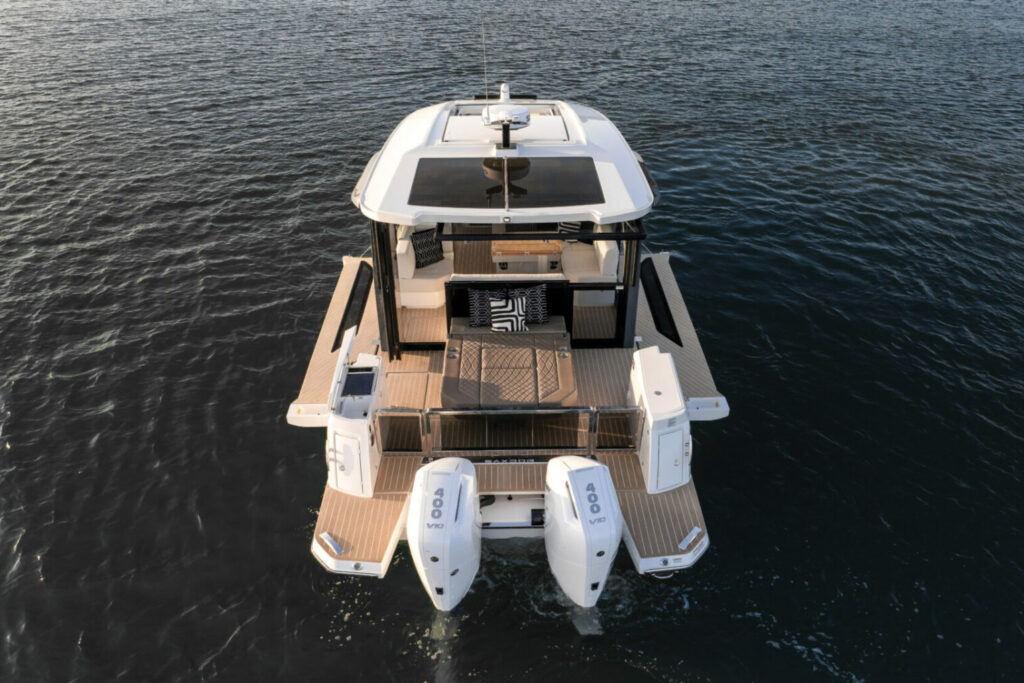
Saxdor 400 GTC
The Saxdor 400 GTC knows how to deal with an angry ocean. It slices the sea with its plumb bow and can get up on top of the water via its three lifting strakes. Wide chines help it run stable, while its two-stepped, resin-infused hull can break free from hydrodynamic drag. Twin Mercury 400 V-10 outboards provide 44 knots on the pins. There are an array of seating and lounging options. The aft deck sun pad’s backrest folds flat. The enclosed cockpit has additional seats, including an L-shape settee with a teak table and lounge to port. Just forward of the seating is the galley. The boat also has pilothouse glass aft that flips up, side windows that lock forward, and a bow pass-through that opens up, creating a true center-console vibe.
Supersede Marine Board
Durable. Recyclable. And it can replace traditional plywood for marine applications. That’s the value proposition of Supersede Marine Board. The company builds Marine Board by extruding bulk post-industrial recycled plastics. The manufacturing process eliminates adhesives and volatile organic compounds. Because the board is recyclable, Supersede regrinds and re-extrudes its solid manufacturing waste into new sheets. A buyback program lets users sell unwanted cuts—and full sheets—back to Supersede. Marine Board is UV-stable, resistant to mold, rot, splinters and termites, and waterproof. The boards can be shaped by standard tools, and can be painted, glued and veneered using traditional products.
Volvo Penta Hybrid Drive
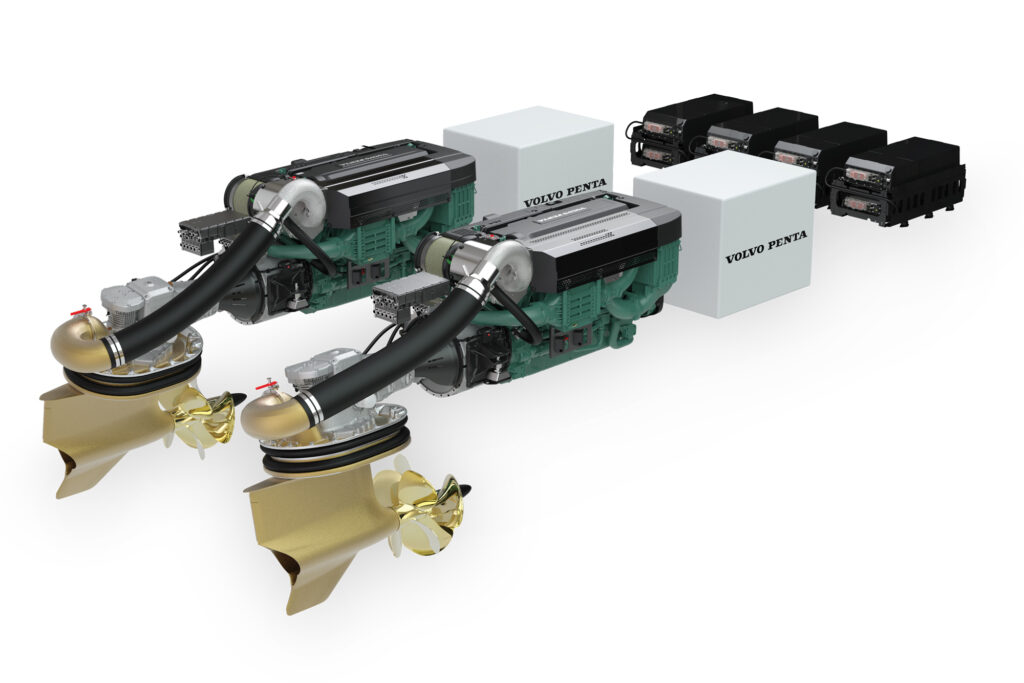
Volvo Penta’s hybrid-electric package is a drive system that spans from helm to propeller, harnessing multiple inline diesel engines and electric motors, plus battery banks, to transition between three propulsion modes: electric, hybrid and hybrid boost. The system is designed for 56- to 98-foot yachts. It can be spec’d to spin contra-rotating propellers of two, three or four IPS drives. In crossover mode, one engine propels two drives. Yacht owners access the hybrid-electric package via Volvo Penta’s electronic vessel control system, which runs on a Volvo Penta Glass Cockpit multifunction display. Skippers can access assisted docking, joystick docking and more in electric or hybrid modes.
Williams EvoJet 70e
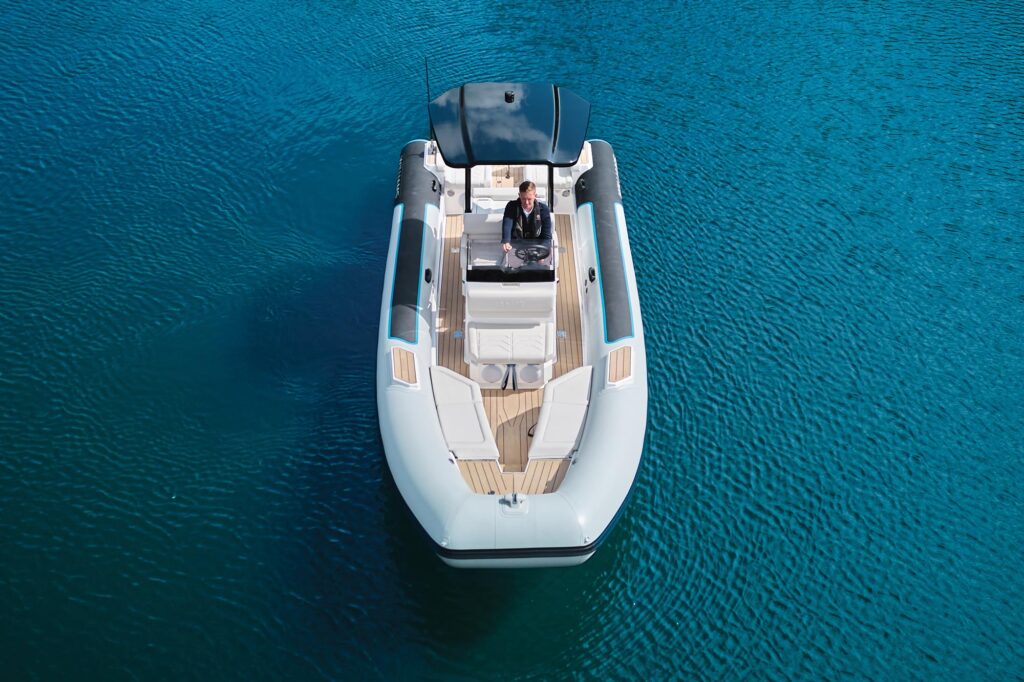
Silent escape. That’s the mission of the Williams Jet Tenders EvoJet 70e. This stylish, 23-foot-3-inch electric RIB is based on the company’s EvoJet 70, but with an electric jet drive. The tender has an EVOA motor built by Yasa, a 58.5 kWh lithium-ion battery bank designed by Williams Advanced Engineering, and a custom-built Garmin multifunction display that presents critical battery, range and charging information. Top speed is about 35 knots. Some standout features include a single-lever throttle, an optional carbon- fiber folding T-top and one-hour recharging. The middle seat folds down for easy access on or off, and a bolster-style helm seat allows the skipper to drive seated or standing. The Williams website has a configurator where owners can spec an EvoJet 70e for personal preferences.