Last year, I helped deliver a sailboat from Seattle to Nanaimo, on Vancouver Island’s southeast flank. Our 15-hour delivery went smoothly, but we were tired as we approached Nanaimo. I was driving when I noticed a shore light glint off a fast-moving object. Instinctively, I throttled back and watched in dismay as an unlit RIB cut less than 100 feet in front of our bow. The situation left me a bit shaken: What would have happened if I hadn’t spotted that glint?
New and affordable technology from Sea.AI can bolster situational awareness and help prevent collisions. This tech has been evolving since 2018, when BSB Marine (now called Sea.AI) created an optical-based and AI-enabled collision-avoidance system called Oscar. It was for singlehanded sailors.
Oscar filled an important situational-awareness hole: Not every vessel carries an Automatic Identification System transponder, and radar can miss targets. Other types of mariners soon heard of Oscar, and the company began building collision-avoidance equipment for powerboats. This early version of the technology could fetch up to $35,000.
Now, Sea.AI’s Watchkeeper systems are available at a fraction of the price of the company’s higher-end offerings. “Watchkeeper can fit any size yacht,” says Christian Rankl, Sea.AI’s chief technical officer. “That’s why we have different configurations.”
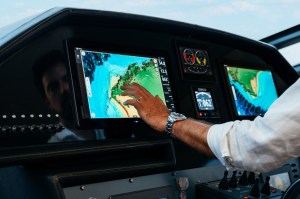
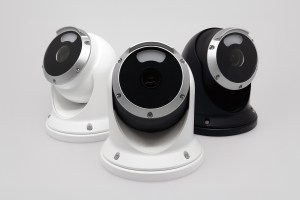
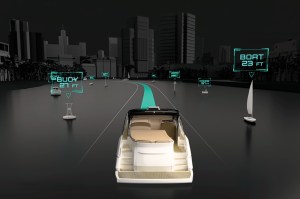
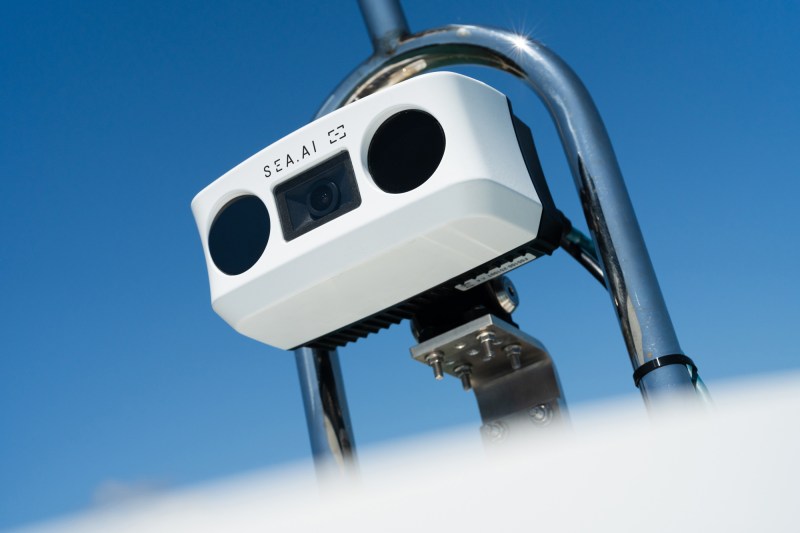
Each of the seven Watchkeeper systems consists of a mast- or skyline-mounted housing that contains one or more cameras, plus processors and other componentry. This is a self-contained edge system, meaning that all data processing is tackled locally. It’s networked with the yacht’s multifunction display or a compatible wireless device, which displays Watchkeeper’s real-time video imagery. This video feed is overlaid with augmented-reality tags that classify detected targets (such as a “sailboat”) and color codes them blue, orange or red based on the threat level.
Watchkeeper systems cannot autonomously adjust the vessel’s autopilot to evade a dangerous target, but they help to ensure that a human operator is aware of the detected object and can make the necessary course adjustments.
“Watchkeeper is an alarm-only system, so it’s a navigation-assistance system,” Rankl says. In addition to onscreen warnings, Watchkeeper triggers escalating auditory alarms on a networked MFD. If Watchkeeper is networked with a wireless device, it can generate voice alarms.
Additionally, the system places targets on a simplified chart.
The seven Watchkeeper models include power- and sailing-specific systems with various setups. They all include one or more low-light red-green-blue daylight cameras, and the thermal-imaging cameras vary depending on the model.
The base model, called Watchkeeper Lite ($4,990), can be used aboard sailboats or powerboats. It has a single low-light RGB camera to provide a 130- by 65-degree field of view (FOV) and 2,953 feet of maximum detection range. (Al Watchkeeper systems can detect large ships out to the horizon, and can detect recreational vessels at greater ranges than buoys.)
Stepping up, the Watchkeeper Motor 320 ($8,990) yields a 24-by-19-degree thermal FOV and 4,265 feet of maximum detection, while the Watchkeeper Sail 320 ($8,990) has a 34-by-25-degree thermal FOV and 2,953 feet of range.
The Watchkeeper Motor 640 ($19,990) provides a 24-by-19-degree thermal FOV and 1.35 nautical miles of maximum detection, while the Watchkeeper Sail 640 ($19,990) allows a 50-by-40-degree thermal FOV and detects objects out to 3,937 feet.
At the top of this line are the Watchkeeper Motor 1280 ($27,990), which yields a 48-by-19-degree thermal FOV and 1.35 nautical miles of situational awareness, and the Watchkeeper Sail 1024 ($27,990), which has a 50-by-34-degree thermal FOV and 1.08 nautical miles of maximum detection.
In terms of reaction time, if a powerboat is traveling at 30 knots, the Watchkeeper Lite gives users 58 seconds to take evasive action. The Watchkeeper Motor 320 delivers up to 1 minute and 24 seconds to change course, while the Watchkeeper Motor 640 and the Watchkeeper Motor 1280 allow 2 minutes and 42 seconds of target-dodging time. The Watchkeeper Motor 1280 also delivers this range over a wider horizontal FOV.
Once a Watchkeeper system detects an object or vessel, its AI will classify the object. “We train a very specific convolutional neural network,” Rankl says. It’s trained on a database containing more than 20 million specific maritime images. “It extracts all the knowledge it can find in the database, and then it basically learns how to apply this knowledge to unseen data,” Rankl says.
While Watchkeeper systems work with all major multifunction display brands, Rankl says that newer MFDs that support full HTML 5 provide the best user experience. That said,
Sea.AI has created nine other integration routes for legacy or non-HTML 5 MFDs.
While the Watchkeeper Lite is limited to daylight-only operations, and the Watchkeeper Motor 320 requires helm vigilance when running at pace, the bigger Watchkeeper Motor 640 and Watchkeeper Motor 1280 systems provide more chronological breathing room.
Also, for anyone who navigates using Expedition or Adrena PC-based navigation software, Rankl says that Sea.AI is working to integrate Watchkeeper with these applications. The company also recently announced integration with forward-looking sonar systems that FarSounder builds, to give boaters insight into targets above and below the waterline.
If you’re interested in increasing situational awareness, Watchkeeper could be a great option. After all, even attentive lookouts can get caught off guard.